

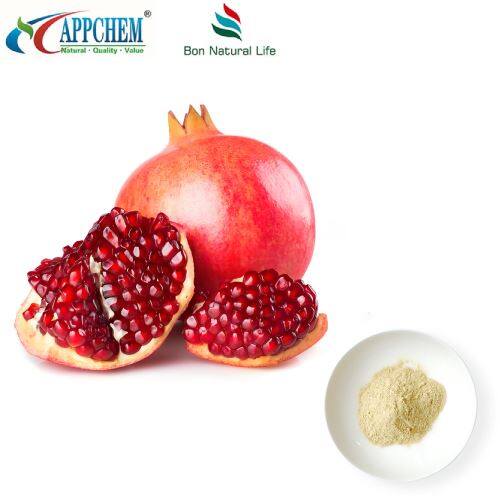
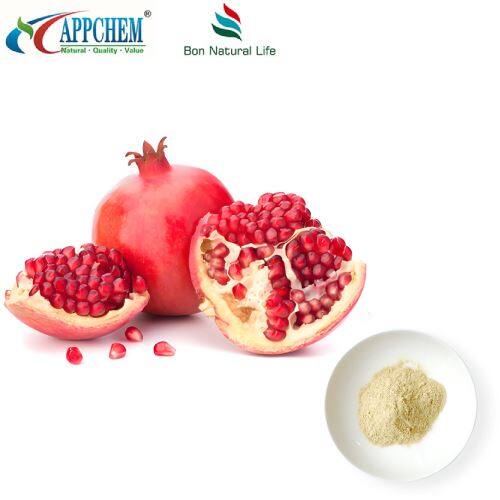
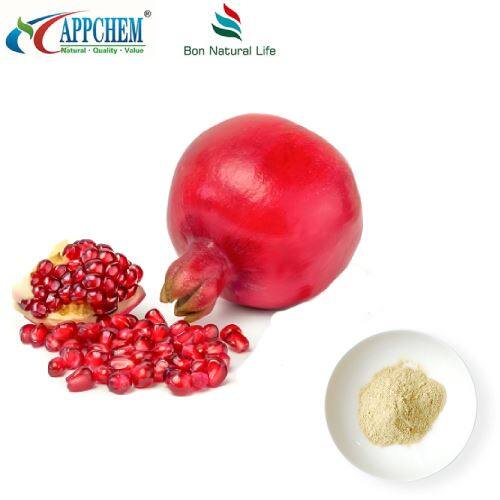
Ellagic acid is a naturally occurring polyphenolic lactone, chemically structured as a lactone of hexahydroxybenzoic acid. It is widely present in various fruits, nuts, and vegetables, among which pomegranate, especially pomegranate peel, is widely recognized as an excellent commercial source for extracting Ellagic Acid in the industry.[2,3]
1. What role does Ellagic Acid play in cosmetics?
In the current global cosmetics market, consumers' demand for "Clean Beauty," "Natural Sources," and "Evidence-Based.[6] Ellagic Acid precisely fits these core market trends, and its uniqueness is reflected in the following aspects:
- Natural sources and sustainability: mainly extracted from by-products of agricultural products such as pomegranate peel, in line with the concepts of circular economy and sustainable development, providing a strong "green" narrative for the brand.
- Multi-functional integration: Ellagic Acid is not a single functional ingredient, but a "versatile athlete" that integrates antioxidant, anti-inflammatory, whitening, and anti-aging functions. This makes it highly cost-effective and synergistic in the formula, simplifying the formula while meeting consumers' demand for multi-effect skincare products.
- Solid scientific endorsement: A large amount of modern scientific research, including recently published literature, has confirmed its multiple benefits for the skin at the molecular level [1,4], distinguishing it from traditional concepts lacking modern scientific validation of plant components.
Therefore, Ellagic Acid, as a high-performance active ingredient derived from pomegranate extract, is positioned as a core component of high-end, natural, and technology-driven skincare solutions.
|
Melting point ≥350 °C |
|
CAS number: 476-66-4 |
|
Molecular formula: C14H6O8 |
|
Molecular weight: 302.19 |
|
EINECS/ELINCS Registration Number: 207-508-3 |
|
Structural formula: |
 |
2. Certificate Of Analysis (COA)
|
Product Name |
Ellagic Acid |
Botanical Source |
Punica granatum L. |
|
CAS No. |
476-66-4 |
Plant Part |
Peel |
|
ITEM |
SPECIFICATION |
RESULT |
TEST METHOD |
|
Physical Description |
|||
|
Appearance |
Greyish yellow to light yellow powder |
Conforms |
Visual |
|
Odor |
Characteristic |
Conforms |
Organoleptic |
|
Taste |
Characteristic |
Conforms |
Olfactory |
|
Particle size |
98% passes through an 80 mesh sieve |
99% |
CP2020 |
|
Chemical Tests |
|||
|
Ellagic Acid |
≥80.0% |
80.58% |
HPLC |
|
Loss on drying |
≤8.0% |
3.87% |
GB 5009.3 (105 ℃, 3 h) |
|
Ash |
≤3.0 % |
1.91% |
GB 5009.4 (600 ℃, 4 h) |
|
Heavy Metals |
≤20 ppm |
<20 ppm |
GB 5009.74 |
|
Lead (Pb) |
≤2 ppm |
0.012 ppm |
GB 5009.12 |
|
Arsenic (As) |
≤1 ppm |
0.013 ppm |
GB 5009.11 |
|
Cadmium (Cd) |
≤2 ppm |
0.009 ppm |
GB 5009.15 |
|
Mercury (Hg) |
≤1 ppm |
0.011 ppm |
GB 5009.17 |
|
Microbiology Control |
|||
|
Aerobic bacterial count |
≤1,000 CFU/g |
<10CFU/g |
GB 4789.2 |
|
Total Yeast & Mold |
≤100 CFU/g |
<10CFU/g |
GB 4789.15 |
|
Escherichia coli |
Negative |
Negative |
GB 4789.38 |
|
Salmonella |
Negative |
Negative |
GB 4789.4 |
|
Conclusion |
Conforms to specification |
||
3. Is Ellagic Acid Effective? How Does It Work?
The multiple benefits of Ellagic Acid on the skin have been confirmed by a large number of cutting-edge scientific studies in recent years, and its mechanism of action has penetrated into the cellular and molecular levels.
3.1 Excellent antioxidant and free radical scavenging ability
The molecular structure of Ellagic Acid contains multiple phenolic hydroxyl groups, making it an excellent electron/hydrogen atom donor that can efficiently neutralize various free radicals. According to a dynamic density functional theory (DFT) study published in 2020, the strong antioxidant activity of Ellagic Acid has been theoretically confirmed at the computational level. In addition, studies have shown that Ellagic Acid can effectively protect skin cells from oxidative stress damage induced by UV-B radiation.[4]
3.2 Strong anti-inflammatory and soothing effects
Ellagic Acid exhibits multi-target anti-inflammatory ability. A study published in the journal "Antioxidants" in 2021 clearly indicated that Ellagic Acid can exert anti-inflammatory effects by inhibiting the MAPK and STAT signaling pathways in keratinocytes, which are key hubs for intracellular transmission of inflammatory signals.[1] Another 2020 study also found that tannic acid can prevent excessive activation of microglia by inhibiting the MAPKs and NF-κB signaling pathways, which also demonstrates its core role in controlling inflammatory responses.[1]
3.3 Significant whitening and pigment-regulating effects
Multiple studies have confirmed that tannic acid can effectively inhibit the activity of tyrosinase.[5] It inhibits substrate entry by binding to the active site of the enzyme (copper ion), thereby reducing melanin synthesis at the source. Long-term use of skincare products containing tannic acid can effectively prevent and fade pigmentation (such as sunspots and age spots), improve acne scars, and achieve overall brightening and uniformity of skin tone.
benefits of Ellagic Acid


4. What Are the Applications of Ellagic Acid?
4.1 Wide range of application areas
With its multiple effects, Ellagic Acid can be widely used in various skincare products:
- High-end anti-aging series: essence, face cream, eye cream, as the core ingredients to combat wrinkles and relaxation.
- Whitening and spot lightening series: skin brightening essence, local spot lightening pen, facial mask, used to improve pigmentation.
- Sunscreen and post-sun repair products: added to sunscreen to enhance light protection, or used in post-sun repair products to soothe inflammation and reduce damage.
- Sensitive muscle repair series: soothing essence, face cream, use its anti-inflammatory properties to soothe fragile skin.
- Anti-pollution/urban protection series: daytime protective lotion, isolation cream, to resist environmental oxidative stress.
4.2 Recommended Dosage and Formula Challenge
The recommended dosage of Ellagic Acid in cosmetic formulations is usually between 0.1% and 2.0%, depending on the product positioning and efficacy requirements. The main formula challenge lies in its low water solubility. To solve this problem, formulators usually need to use solubilizers, adjust the pH value of the formula, or use polyol systems.
|
5. Why choose APPCHEM?Our production and equipmentOur free service hotline:+86-29-88346301  20 years Appchem has been working in the plant extraction industry since 2006. 26 certificates Appchem has obtained most of the professional certificates in the industry and insists on international standards of production. 21 awards APPCHEM has won many awards for our strong creativity, excellent knowledge, and diverse corporate honors.
6. Certificates |


Security statement:
Our company guarantees that the goods sent are safe, non-flammable, and non-explosive, and consistent with the declaration. Under normal transportation conditions, all losses caused by the products sent by our company shall be borne by our company.
Tags: Ellagic Acid Pomegranate Extract, Ellagic Acid Powder manufacturers, suppliers, factory, wholesale, best, price, buy, for sale, bulk.

Reference
[1]A Comprehensive Review on Pharmacological Activities of Ellagic Acid and Its Applications. Yogitha Paruvu et al. [2025-01-16]
[2]Cosmeceutical Science in Clinical Practice. Neil S. Sadick et al. [2023]
[3]Interaction between Ellagic Acid from Pomegranate Peel and Corn Starch and Its Mechanism of Inhibiting Starch Digestibility. CHEN Shengdan et al. [2025-05]
[4]Ellagic acid plays a protective role against UV-B-induced oxidative stress by up-regulating antioxidant components in human dermal fibroblasts. [2016-01-01]
[5]Ellagic Acid from Hull Blackberries: Extraction, Purification, and Potential Anticancer Activity. Wang et al. [2023-10-16]
[6]REPORTE DE TENDENCIAS Cosméticos Marzo 2024. CENTRO DE INVESTIGACIÓN DE ECONOMÍA NEGOCIOS GLOBALES ADEX NUEVO MUNDO NUEVOS NEGOCIOS. [2024-03]


