


What is Cosmetic Ingredients Phloretin?
Phloretin (CAS No. 60-82-2) is a dihydrochalcone flavonoid compound naturally occurring in numerous plant species. It is predominantly concentrated in apples, pears, and their root bark, hence its name. As a potent plant polyphenol, phloretin's unique molecular structure endows it with exceptional biological activity, demonstrating significant application potential across pharmaceutical, food, and cosmetic sectors. Our company, APPCHEM, employs advanced extraction and purification techniques to provide cosmetic-grade phloretin raw material with purity exceeding 90%. Presenting as a white to pale yellow crystalline powder, it ensures your formulations commence with an outstanding foundation of quality and efficacy.
Phloretin transcends a single-function ingredient to serve as a broad-spectrum solution for diverse skin concerns. Its core strength lies in potent antioxidant capabilities, effectively neutralising free radicals triggered by UV exposure, environmental pollutants, and other external factors. This action delays photoaging at its source while shielding skin cell DNA from damage. Furthermore, its multifaceted benefits-including anti-inflammatory and antibacterial properties, sebum regulation, and enhanced skin permeability-establish it as an indispensable key player in modern functional skincare formulations. Compared to many traditional antioxidants, Phloretin demonstrates superior bioavailability and penetration capabilities, enabling it to traverse the epidermis and exert effects at deeper dermal layers. This makes it highly favoured in premium anti-ageing, brightening, and repair products.
PS: This page focuses on product application information.
For the product Technical Data Sheet, please click HPLC90% Phloretin Powder COA TDS.
For Integrated Supply Chain & Solutions, please click Apple Extract Phloretin Bulk Supply.
How Effective is Phloretin and How Does it Work?
As a polyphenolic compound, the skincare benefits of Phloretin arise from its multi-targeted, multi-pathway synergistic effects. A thorough understanding of its mechanism of action enables formulators to harness its potential more precisely, thereby developing market-leading skincare products.


Broad-spectrum antioxidant protection against environmental aggressors
1. Performance: Prevents and improves signs of photoaging such as dullness, roughness, fine lines and sagging, enhancing overall skin radiance and health.
2. Mechanism of Action:
- Direct Radical Scavenging: The Phloretin's molecular structure contains multiple phenolic hydroxyl groups. These groups act as potent hydrogen donors, rapidly and efficiently neutralising various reactive oxygen species (ROS) harmful to skin, such as superoxide anion and hydroxyl radicals. When skin is exposed to environmental stressors like UV radiation and pollutants, it generates substantial free radicals that attack cell membranes, proteins, and DNA. Phloretin reacts preferentially with these free radicals, converting them into stable, harmless compounds and thereby halting destructive chain reactions.
- Activation of the endogenous antioxidant system: Beyond direct radical scavenging, Phloretin activates the intracellular Nrf2 signalling pathway, thereby upregulating the expression of a series of endogenous antioxidant enzymes (such as superoxide dismutase (SOD) and glutathione peroxidase (GSH-Px)). This effectively fortifies the skin's inherent 'antioxidant defence system', enabling it to withstand persistent oxidative stress more enduringly and effectively.
- Inhibiting lipid peroxidation: Cell membranes, rich in unsaturated fatty acids, are highly susceptible to free radical attacks, leading to lipid peroxidation, which causes membrane damage and functional impairment. Phloretin effectively suppresses this process, safeguarding membrane integrity and maintaining the health of the skin barrier function.
Multi-pathway synergy for effective skin brightening
1. Performance: Brightens overall complexion, fades existing pigmentation (such as sun spots and acne marks), and prevents new hyperpigmentation.
2. Mechanism of Action:
- Inhibits Tyrosinase Activity: Tyrosinase is the key rate-limiting enzyme in melanin synthesis. Phloretin effectively suppresses its activity, thereby reducing melanin production at its source. Research indicates geniposide demonstrates superior tyrosinase inhibition compared to traditional whitening ingredients such as arbutin and kojic acid. Regarding its specific inhibitory half-maximal concentration (IC₅₀ value), reported figures vary across studies, ranging from 37.5 μmol/L to 169.36 μmol/L. This discrepancy may relate to experimental conditions, tyrosinase source (e.g., mushroom-derived or human-derived), and purity. Nevertheless, numerous studies have confirmed its inhibitory potential, indicating it is a highly promising whitening active ingredient.
- Antioxidant inhibition of melanin synthesis: Melanin synthesis is a complex oxidative process. Phloretin's potent antioxidant capacity can disrupt multiple oxidative steps within this pathway, reducing the formation of intermediates such as dopaquinone and thereby further inhibiting melanin production.
- Influence on melanosome transport: Some studies suggest Phloretin may also affect the transport of melanosomes from melanocytes to keratinocytes, reducing pigment deposition at the skin surface.
Powerful anti-inflammatory action
1. Performance: Alleviates skin irritation such as redness, burning sensations, and itching, while improving acne issues caused by inflammation.
2. Mechanism of action: The anti-inflammatory effects of Phloretin have been extensively validated. It primarily functions through the following pathways:
- Inhibits release of inflammatory mediators: Phloretin suppresses production and release of multiple pro-inflammatory cytokines (e.g., tumour necrosis factor-α, TNF-α; interleukins, ILs) and inflammatory mediators (e.g., prostaglandin E2, PGE2). Modulates inflammatory signalling pathways: It intervenes in key inflammatory pathways such as NF-κB, reducing cascade amplification of inflammatory responses at the transcriptional level.
What Are Its Market Applications, Formulations, and Case Studies?
1. Core Application Areas
The multifunctional properties of Phloretin render its applications exceptionally broad, aligning closely with the aforementioned product positioning to address diverse market segment requirements. Its core applications span the spectrum from daily care to professional repair:

High-Efficiency Antioxidant & Daytime Protection:
- Product Types: Antioxidant Serums, Day Protective Lotions/Creams, Sunscreen Products (as an enhancer), Makeup Primer.
- Application Logic: Leveraging its potent free radical scavenging capacity to combat daytime oxidative damage caused by UV radiation, blue light, and environmental pollutants. When incorporated into sunscreen formulations, it not only elevates SPF values but also delivers biological protection beyond chemical filters, mitigating deep-seated UV-induced skin damage.
Brightening & Spot-Fading:
- Product Types: Brightening Serums, Spot Correctors/Creams, Brightening Masks, Tone-Correcting Serums.
- Application Logic: With its multi-pathway inhibition of melanin production, genkwanin serves as a core brightening ingredient for developing safe, effective skin-illuminating formulations. Its efficacy surpasses certain traditional brightening agents, offering brands novel marketing propositions and technical advantages.
Anti-Ageing & Firming Repair:
- Product Types: Anti-wrinkle serums, firming face/neck creams, repair night creams, eye serums/eye creams.
- Application Logic: Combats intrinsic and extrinsic ageing by inhibiting collagen and elastin degradation while promoting skin self-repair. Effectively improves fine lines and wrinkles, enhancing skin firmness and elasticity.
Oil Control, Acne Treatment & Problem Skin Care:
- Product Types: Acne-fighting serums, oil-balancing lotions, soothing repair creams, purifying masks.
- Application Logic: Utilising anti-inflammatory and antibacterial properties to calm redness and inflammation caused by breakouts while inhibiting Propionibacterium acnes. Simultaneously, its sebum-regulating function helps fundamentally improve oily skin conditions.
2. Recommended Product Formulations
The physicochemical properties of Phloretin render it suitable for diverse cosmetic formulations, affording formulators extensive creative scope.
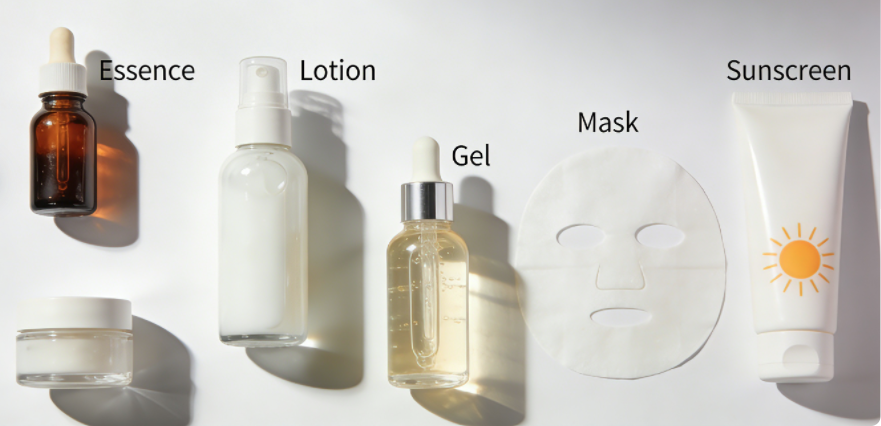
- Serum: This represents the most classic and effective application form for Phloretin. Owing to its poor water solubility, it typically requires dissolution in polyols such as ethanol, propylene glycol, or butylene glycol, or in organic solvents. Water-based serums can be formulated by adjusting solvent systems or employing solubilisation techniques. Transparent or translucent serum formulations effectively convey the product's technological sophistication.
- Lotion / Cream: Within emulsion systems, Phloretin disperses well in the oil phase or can be incorporated into the aqueous phase via microemulsion technology. Lotions and creams offer superior occlusive and moisturising properties, making them suitable for formulation with hydrating and repairing ingredients in anti-ageing creams or soothing repair lotions.
- Gel: The lightweight gel texture suits oily skin or summer use. Phloretin can be dissolved in solvent systems and thickened with polymers like carbomer to form gels, delivering a refreshing, non-greasy feel.
- Facial Mask: Whether sheet masks or spreadable masks, Phloretin can be incorporated as a core active ingredient in serums or bases. The intensive treatment format of masks enhances Phloretin penetration, delivering noticeable brightening and soothing effects within a short timeframe.
- Sunscreen: As a photoprotection enhancer, Phloretin can be incorporated into various sun protection formulations, including sun creams and sprays.
- Other Formulations: It may also be used in hair care products (shampoos, conditioners) to leverage its antioxidant properties for protecting the scalp and hair strands.
Recommended Concentration: Depending on product positioning and efficacy claims, the recommended concentration range for genipin in cosmetics is 0.3%–2.0%. For entry-level antioxidant products, concentrations of 0.3%–0.5% may be employed. In high-performance brightening or anti-ageing formulations, concentrations may be increased to 1.0%–2.0% to achieve optimal results.
3. Market Benchmark Case Study: SkinCeuticals Phloretin CF Serum
The internationally renowned professional skincare brand SkinCeuticals' Phloretin CF (marketed domestically as the "Brightening Repair Day Serum") exemplifies the application of phloretin. It stands as the ultimate testament to its market value.
|
|
Product Name: SkinCeuticals Phloretin CF Formulation: Facial Serum Core Ingredient Formulation: 2% Phloretin: Broad-spectrum antioxidant that neutralises free radicals, accelerates cell renewal, and evens skin tone. 10% L-Ascorbic Acid: Classic antioxidant that neutralises free radicals and promotes collagen synthesis. 0.5% Ferulic Acid: Plant-derived antioxidant that neutralises free radicals while enhancing the stability and antioxidant efficacy of phloretin and vitamin C. Success Story: This "Triple-Action Antioxidant Complex" harnesses synergistic interactions between ingredients. Phloretin not only functions as a potent antioxidant itself but also enhances the stability and penetration of vitamin C within the formulation. Ferulic acid further fortifies the system's overall antioxidant capacity. The success of this golden combination has cemented Phloretin's position in the premium antioxidant market while providing formulation inspiration and market validation for other brands developing similarly effective products. |

What Are the Application Restrictions and Formulation Considerations?
To ensure Phloretin achieves maximum efficacy and maintains stability within your formulation, please observe the following application limitations:
Solubility
Phloretin exhibits extremely low solubility in water, presenting a primary challenge for its incorporation into aqueous formulations. Formulators must employ organic solvents such as ethanol, propylene glycol, butylene glycol, or dimethyl sulfoxide (DMSO) as solvents. When developing alcohol-free formulations, consider using solubilising agents, such as polyol-based blending systems or PEG derivatives.
Light Sensitivity
Phloretin is photosensitive. Prolonged exposure to light, particularly ultraviolet radiation, may cause degradation, discolouration, and diminished efficacy.
- Formulation Recommendations: Incorporate light stabilisers into formulations; production processes should be conducted under light-protected conditions.
- Packaging Recommendations: Finished products should be packaged in opaque or dark-coloured (e.g., brown, blue) light-protective containers such as dropper bottles or pump-top bottles to minimise light exposure.
Heat Sensitivity
Prolonged exposure of Phloretin to excessive heat should be avoided.
Formulation Recommendations: During production, incorporate geniposide during the cooling phase of emulsification or homogenisation (typically below 40°C) to prevent thermal degradation of its active structure.
PH Dependency
While existing data does not explicitly specify an optimal pH range for Phloretin, as a phenolic compound, its stability and activity generally perform best in weakly acidic conditions (pH 3.0–5.5). This also facilitates its penetration into the skin surface. Excessively high or low pH values may cause structural changes or accelerate oxidation. Rigorous pH stability and efficacy testing are recommended during formulation development.
What is the Regulatory Status in Major Global Markets?
Phloretin maintains an excellent compliance record across key global cosmetic markets, facilitating your product's entry into international markets.
- United States (USA): The US Food and Drug Administration (FDA) has not classified Phloretin as a prohibited or restricted substance. It is widely recognised as a safe cosmetic ingredient. Notably, Phloretin is listed by the Fragrance and Extract Manufacturers Association (FEMA) as Generally Recognised as Safe (GRAS) (No. 4390) for use as a food flavouring. This status provides strong evidence for its safety in products intended for human contact. Currently, the FDA has not established a maximum permitted concentration for Phloretin in cosmetics (Query result indicates no specific limit found).
- European Union (EU): Within the EU, Phloretin is listed in the Cosmetic Ingredient Database (CosIng) and is permitted for use as a cosmetic raw material. Currently, EU Regulation (EC No. 1223/2009) imposes no specific usage restrictions or concentration limits on Phloretin (Query result indicates no specific limit found). Manufacturers must comply with regulatory requirements and ensure the product's overall safety assessment (CPSR) is compliant.
- Japan: Under Japan's Ministry of Health, Labour and Welfare (MHLW) cosmetic regulations, Phloretin is not listed as a restricted or prohibited ingredient. Businesses may utilise it as a standard cosmetic ingredient without special approval, though must still ensure final product safety and compliance. No official concentration limit has been identified in Japanese regulations (Query result indicates no specific limit found).
- China: Phloretin is listed in China's Catalogue of Cosmetic Ingredients in Use, permitting its lawful production and sale within China. Furthermore, its inclusion in the 2014 Chinese Food Additives Catalogue (No. N376) provides additional evidence of its safety.
Why Choose APPCHEM?
We are not only a supplier of high-quality Phloretin raw materials, but also a trusted partner on your product development journey. With years of specialisation in the field of plant extracts, we possess formidable capabilities and an outstanding reputation.
Company Milestones
Established in 2006, our company specialises in the research, development and production of natural active ingredients. In 2007, we invested in establishing a modern, independent factory spanning over 6,900 square metres, integrating R&D, production and quality control under one roof. In 2008, we achieved our first ISO 9001 Quality Management System certification, signifying a new level of management excellence. Today, we hold the designation of "National High-Tech Enterprise", possess multiple invention patents, and serve hundreds of renowned global cosmetic brands.
[To learn more about our journey, please click here to visit our "Development History" page]

Cutting-Edge R&D and Production Facilities
- Research Centre: Our Xi'an-based technical centre houses specialised laboratories equipped with advanced analytical and R&D instruments, including High-Performance Liquid Chromatography (HPLC), Gas Chromatography (GC), Liquid Chromatography-Mass Spectrometry (LC-MS), and Fourier Transform Infrared Spectroscopy (FTIR).
- Production Environment: Our manufacturing facilities are designed and managed in strict compliance with GMP standards, featuring four independent production lines to ensure clean, controlled, and efficient processes.
[To explore our innovation capabilities, please click here to visit our 'R&D and Innovation' page]
Stringent Quality Control System
We guarantee that every batch of Phloretin undergoes rigorous, comprehensive testing.
- Purity: Determined via HPLC analysis, ensuring content ≥90%.
- Residual Solvents: Strictly adhering to guidelines, solvent residues are maintained well below safety thresholds.
- Heavy Metals: Lead, arsenic, mercury, cadmium, and other heavy metals comply with the most stringent international standards (≤10ppm). Microorganisms: Total plate count ≤1000cfu/g, yeast and mould ≤100cfu/g.

Authoritative Certification
We hold ISO 9001 Quality Management System certification, ensuring standardised processes and customer satisfaction. We hold ISO 22000, SC, Kosher, and Halal certifications, demonstrating our production environment and operational standards meet international benchmarks.
[To view our full certification portfolio, click here to visit our 'Certification' page]
Reference
[1]Talita Pizza Anunciato Casarini, L. Frank et al. "Dermatological applications of the flavonoid phloretin." European journal of pharmacology (2020).
[2]Seoungwoo Shin, H. Kum et al. "Molecular Sciences Protective Effects of a New Phloretin Derivative against UVB-induced Damage in Skin Cell Model and Human Volunteers." International Journal of Molecular Sciences (2014).
[3]D. Barreca, E., Bellocco et al. "Biochemical and antimicrobial activity of phloretin and its glycosilated derivatives present in apple and kumquat." Food Chemistry (2014).
[4]Jianmin Chen, Qinglian Li et al. "Phloretin as both a substrate and inhibitor of tyrosinase: Inhibitory activity and mechanism." Spectrochimica acta. Part A, Molecular and biomolecular spectroscopy (2020).
[5]Meng Zhang, Zhuang Xue et al. "Designed Fabrication of Phloretin-Loaded Propylene Glycol Binary Ethosomes: Stability, Skin Permeability and Antioxidant Activity." Molecules (2023).
[6]Yoshimasa Nakamura, Shigeo Watanabe et al. "Dihydrochalcones: evaluation as novel radical scavenging antioxidants." Journal of agricultural and food chemistry (2003).
[7]Wei-Tien Chang, Wen-Chung Huang et al. "Evaluation of the anti-inflammatory effects of phloretin and phlorizin in lipopolysaccharide-stimulated mouse macrophages." Food chemistry (2012).
[8]C. Wu, Y. Ho et al. "In vitro and in vivo study of phloretin‐induced apoptosis in human liver cancer cells involving inhibition of type II glucose transporter." International Journal of Cancer (2009).
[9]B. Rezk, G. Haenen et al. "The antioxidant activity of phloretin: the disclosure of a new antioxidant pharmacophore in flavonoids." Biochemical and biophysical research communications (2002).
[10]A. Mariadoss, Ramachandran Vinayagam et al. "Phloretin-loaded chitosan nanoparticles augment the pH-dependent mitochondrial-mediated intrinsic apoptosis in human oral cancer cells." International journal of biological macromolecules (2019).


