

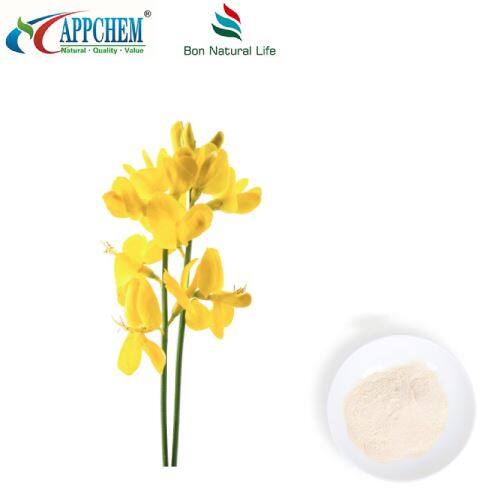
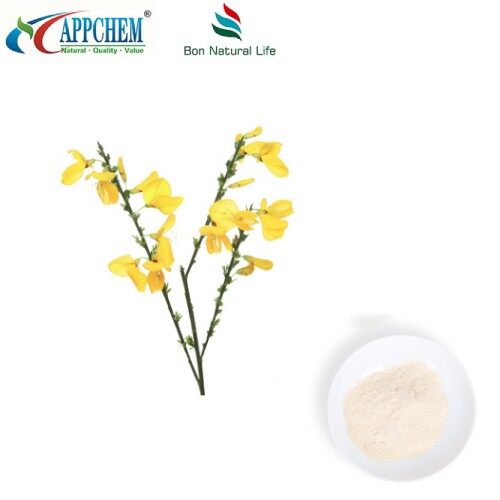
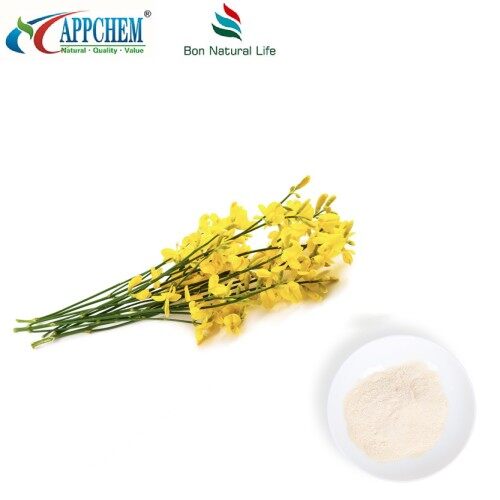
Cytisine (also known as cytisinicline; CAS No. 485-35-8) is a compound found in plants of the genus Thermopsis within the legume family (Leguminosae). It is a natural alkaloid extracted from leguminous plants.[1-3] This plant contains various alkaloids, among which the relative content of quercetin is the highest, accounting for about half of the total alkaloid content. Chrysophylline has high medicinal value and is an important raw material for the pharmaceutical industry. Jinquehua alkaloid is a partial agonist of α4β2 nicotinic acetylcholine receptors, which is the basis for its various pharmacological effects, especially its smoking cessation effect.
01 Basic Information
| Molecular formula: C11H14N2O |
| Molecular weight: 190.242 |
| Melting point: 154℃ |
| Boiling point: / |
| Odor and taste: Characteristic |
| Dissolution property: H2O-125 mg/mL (657.06 mM) |
| Detection method: HPLC |
| Annual Supply Capacity: 10 MT |
|
Structural formula:
|

02 Plant Morphological Characteristics
Cytisine is primarily derived from the leguminous plant Thermopsis lanceolata R. Br., which is used as a medicinal herb and is commonly known as "Shepherd's Beans"(Muma beans). It is also known as the yellow-flowered bitter bean, wild cassia seed, spear-leaved wild cassia seed, or bitter bean.

Muma beans are a perennial herbaceous plant, usually 10-40 centimeters tall (recorded up to 100 centimeters), and completely hairless throughout the plant.
Root system: The rhizome is slender, light yellow brown, with a few fibrous roots.
Stem: The stem is upright, slightly branched, with fine longitudinal lines on the surface, and covered with long, brown hairs.
Leaves: The leaves are ternately compound and alternately arranged. The leaflets are oblong to lanceolate, measuring 2.5–8.5 cm in length and 7–20 mm in width. The apex is acute and pointed, and the base is wedge-shaped; Smooth on top of leaves, densely covered with flat short hairs below; There are 2 leaflets, opposite to each other, connected at the base.
Flower: terminal inflorescence; Floral whorls, 2-3 per round, connected at the base; The flower is about 3 centimeters long; Calyx tube-shaped, approximately 1.6 centimeters long; Crown butterfly-shaped, yellow. The flowering period is from May to July.
Fruit and seeds: The pods are strip-shaped, measuring 5-9 centimeters in length and 7-12 millimeters in width. Seed kidney-shaped, black, brown, glossy. The fruiting period is from July to September.[6]
Shepherd beans grow on riverbank grasslands, dunes, roadsides, and field edges. It is distributed in northeast, north, and northwest China, as well as Inner Mongolia, Hebei, Shanxi, Shaanxi, Ningxia, Gansu, Qinghai, Xinjiang, Sichuan, Xizang, and other provinces and regions.

The whole grass of Muma beans contains alkaloids ranging from 0.5% to 3%, of which the content of genistein accounts for about half of the total alkaloids. The alkaloid content in the seeds is relatively high, reaching up to 5%.[5] Its main alkaloid components are cytisine, in addition to berberine, sophocarpine, stinky bean alkaloid, methyl quercetin, eagle claw bean alkaloid, arginine, lupine, rhododendron alkaloid, and huanghua amine. The leaves still contain a small amount of flavonoids.[6]
03 Extraction Technology & Process
The extraction of cytisine utilizes multiple techniques designed to achieve high yield and purity. The conventional extraction process includes: raw material → drying → crushing → alcohol reflux extraction → separation by macroporous resin → separation by silica gel chromatography → recrystallization → drying → production.
- Traditional extraction and crystallization method: using muma beans as raw material, after crushing, soaking and extracting with ethanol, filtering and combining the filtrate, and concentrating to obtain the extract; adjust the pH of the extract with sulfuric acid and extract it with chloroform to remove organic impurities; Adjust the pH of the water layer with sodium hydroxide to make the alkaloid free, and then extract the total alkaloids with chloroform; Dissolve and cool the total alkaloids in acetone to obtain crude crystals; The crude crystals were repeatedly dissolved in ethyl acetate and acetone, cooled and recrystallized to obtain high-purity cytisine.
Featuring simple steps and easy operation, this method offers high efficiency, rapid crystallization, high yield, and product purity over 98%.
- Macroporous resin purification method: This method uses horse pea seeds as raw materials, crushed to 40-60 mesh, and extracted with supercritical CO₂ fluid (conditions: pressure 21-22 MPa, temperature 40-45 ° C, CO₂ flow rate 30-35 kg/h, extraction time 3-5 hours) to obtain crude cytisine.
Dissolve the analyte in an acidified aqueous solution (pH 1–3) and filter. Adjust the pH to 7.5–8.5, adsorb onto a macroporous resin column, and rinse with water until the effluent runs neutral. Then elute the target compounds using 60–90% ethanol. The eluent is concentrated under reduced pressure to obtain a liquid extract. Finally, acetone is added and heated to reflux to dissolve the crystals 2-3 times. The crystals are filtered and dried at low temperature to obtain cytisine. This method has high extraction efficiency, requires fewer toxic reagents, and is more environmentally friendly.[10]
04 Certificate of Analysis(COA)
|
Product Name |
Cytisine
|
Botanical Source |
Thermopsis lanceolata R.Br
|
|
CAS No. |
485-35-8
|
Plant Part |
Seed
|
|
ITEM |
SPECIFICATION |
RESULT |
TEST METHOD |
|
Physical Description |
|||
|
Appearance |
Light yellow to Off-White Powder |
Conforms |
Visual |
|
Odor |
Characteristic |
Conforms |
Organoleptic |
|
Taste |
Characteristic |
Conforms |
Olfactory |
|
Identification
|
The thin-layer plate should show the
same spot at the corresponding
position of the control.
|
Conforms | TCL |
| Chemical Tests | |||
|
Assay(Cytisine) |
≥98.0% |
98.63% |
HPLC |
|
Loss on drying |
≤3.0% |
2.21% |
GB 5009.3 |
| Microbiology Control | |||
|
Aerobic bacterial count |
≤1,000 CFU/g |
<10 CFU/g |
GB 4789.2 |
|
Total Yeast & Mold |
≤100 CFU/g |
<10 CFU/g |
GB 4789.15 |
|
Escherichia coli |
Negative |
Negative
|
GB 4789.38 |
|
Salmonella |
Negative |
0/25g
|
GB 4789.4 |
|
Staphylococcus aureus
|
Negative |
Negative
|
GB 4789.10
|
|
Conclusion |
Conforms to specification |
||
|
Storage: |
Store in a cool, dry, well-ventilated area; keep in tightly sealed containers, preferably full. | ||
|
Shelf Life: |
24 months when properly stored. |
||
|
Status: |
Non-irradiation; Non-GMO. |
||
05 Application Efficacy And Mechanism Of Action
According to records, shepherd's bean is a toxic plant, and its main active ingredient is cytisine. Recent studies indicate that cytisine alkaloids exhibit multiple pharmacological effects, such as anti-arrhythmic, anti-ulcer, antimicrobial, and white blood cell-enhancing activities, with particularly potent anti-cancer properties.[6]
- Core application: Smoking cessation assistance
The most well-known and extensively researched application of cytisine is smoking cessation assistance.
051 Mechanism of action:
Partial agonist: Cytisine can selectively bind with high affinity to α4 and β2 neuronal nicotinic acetylcholine receptors (nAChRs), partially mimicking the effects of nicotine, thereby helping to alleviate withdrawal symptoms during smoking cessation, such as anxiety, irritability, and craving for tobacco.[6]
The results of the study indicate that "the smoking cessation effect of cytisine is superior to the currently widely used smoking cessation medication - placebo", and "genistein is cheaper compared to other smoking cessation therapies, and it may become an economically affordable treatment to promote smoking cessation worldwide". Research has shown that a smoking cessation preparation mainly composed of tartaric acid salt of cytisine has a one-year smoking cessation effectiveness rate of up to 22%, and has considerable development prospects in promoting smoking cessation.[7]

Numerous clinical trials and systematic reviews have demonstrated the efficacy of cytisine in supporting smoking cessation. A large-scale clinical trial (n=1200) showed that the 12-week smoking cessation success rate of smokers using genistein was 35%, significantly higher than the 15% success rate of the placebo group and the 20% success rate of the nicotine patch group. Compared with another commonly used smoking cessation drug, Varenicline, a randomized clinical trial involving 800 smokers showed that the success rate of smoking cessation with cytisine (25-day course) was 40%, which was comparable to Varenicline's (84-day course) success rate of 42%, with no statistically significant difference. This indicates that cytisine can achieve smoking cessation effects similar to varenicline in a shorter course of treatment.[8]
The Cochrane systematic review indicates that cytisine is more effective than a placebo and may be as effective as varenicline. It is estimated that 18 to 23 out of every 100 people who quit smoking with cytisine may successfully quit.
052 Other potential applications and benefits:
Neuroprotection and cognitive improvement: It may have potential effects on improving cognitive function in Alzheimer's or Parkinson's disease by regulating the cholinergic system (still under research). Current research indicates that cytisine demonstrates pharmacological potential in several areas, including antiarrhythmic, antimicrobial, anti-ulcer, and leukocyte-enhancing effects , with antitumor activity warranting further attention.
Other traditional applications: In some countries (such as Russia), it is also used as an adjuvant therapy for bronchitis and hypotension (modern evidence is limited).[9]
06 Safety, side effects, and contraindications
In clinical trials, cytisine has good tolerance. The most common adverse reactions include nausea, insomnia, abnormal dreams, and headaches, but they are usually mild in severity and alleviate over time. Serious adverse reactions are rare.
- Contraindicated population
①Pregnant and lactating women: It may affect fetal development or milk secretion.
②Cardiovascular disease patients, such as those with angina pectoris, arrhythmia (due to the possibility of elevated blood pressure and heart rate).
③Patients with mental illnesses, such as schizophrenia, may experience worsening symptoms.
④People who are allergic to genistein.
- Drug interactions
Avoid using in combination with the following medications:
①Other nicotine replacement therapies, such as nicotine patches, may excessively stimulate receptors and increase the risk of side effects.
②Antidepressants (such as SSRIs): They may increase the risk of neurological side effects.

07 Market Prospects and Development Trends
Cytisine, a natural alkaloid, has gained prominence as an effective smoking cessation aid worldwide owing to its clear mechanism of action, clinically validated efficacy, favorable safety profile, and high cost-effectiveness. With the increasing awareness of health and the growing demand for smoking cessation, especially its potential advantages over varenicline and nicotine replacement therapy, the application prospects of genistein and its related products are highly promising.
08 Why Choose APPCHEM?
 |
Proven Expertise & Global Reach Nasdaq-listed(Nasdaq: BON) manufacturer with 19+ years in herbal extract production and 19+ years of export experience; Products are distributed to over 100 countries, and extensive participation in international exhibitions. |
 |
24/7 Customer-Centric ServiceDedicated 4-person after-sales team providing real-time support; Comprehensive order tracking system for full supply chain visibility. |
|
|
Certifications & Industry Leadership20+ certifications: China SC License, ISO9001/ISO22000, FDA, Kosher, Halal, etc.; Passed FDA unannounced inspections and on-site audits by global authorities; 30+ national patents, 53 registered trademarks; drafted 4 international standards (e.g., Stachyose, Apple Extract); Established enterprise standards for Sclareol/Ambroxide, enabling premium market access. |
 |
End-to-End Quality ControlRaw Material Selection: Procurement with full traceability; Advanced Production: 100,000-Class cleanrooms, triple-core technologies (ton-scale extraction, heavy metal removal, enzymatic purification) meeting FDA/EU standards; Rigorous Testing: The QC department conducts strict inspections from raw materials to finished products. |
 |
R&D & Customization CapabilitiesPhD-led R&D team (>50% hold advanced degrees) with cutting-edge equipment (e.g., molecular distillation, nanofiltration); Custom formulations, packaging, and OEM solutions; factory audits accepted; no trader involvement. |
 |
Robust Supply ChainHigh Capacity: 50+ technicians, multiple production lines, daily output exceeding 1,000 tons; Fast Delivery: 80% of orders are shipped immediately; global logistics network (EU/US) with door-to-door multimodal transport; Inventory Efficiency: 40+ SKUs across 4 product lines, 1,000+ tons of inventory for flexible fulfillment. |
 |
Competitive Cost StructureFactory-direct pricing reduces procurement and logistics costs. Partnerships with packaging and logistics providers ensure cost-effective solutions. |
 |
Cutting-Edge Testing LabEquipped with HPLC, atomic absorption spectrometers, UV spectrophotometers, etc. Full-spectrum testing for heavy metals, microorganisms, and compliance with global regulations. |

09 Certificate

Security statement:
Our company guarantees that the goods sent are safe, non-flammable, and non-explosive, and consistent with the declaration. Under normal transportation conditions, all losses caused by the products sent by our company shall be borne by our company.
Tags: Cytisinicline; cytisine; Thermopsis lanceolata R.Br; Sophorine, Baptitoxine, Baphitoxine, manufacturers, suppliers, factory, wholesale, best, price, buy, for sale, bulk.

10 Cooperation Partners

Reference:
[1]Institute of Botany, Chinese Academy of Sciences. Atlas of Chinese Higher Plants (Volume II) [M]. Beijing: Science Press, 1972
[2]Fu Kunjun, Zhang Zhenwan, He Shanbao, et al. Flora of China [M]. Beijing Science Press, 1993.42
[3]Li Yanghan. Chinese Weed Chronicles [M]. Beijing: China Agricultural Press, 1998
[4]Wuyong, Borijihan Geriletu. New Extraction Ways For Preparation Of Cytisine[J]. Journal of Inner Mongolia Normal University(Natural Science Edition), 2004, (02):186-187.
[5]Ye Run, Chen Yihui, Cai Jing, et al. Extracing Technology and Content Determination of High Purity Cytisine[J]. Ion Exchange and Adsorption, 2020, 36(02):163-172.DOI:10.16026/j.cnki.iea.2020020163.
[6]Zhang Yi. Extraction and Separation of Cytisine from Thermopsislanceolate in the Study on Production Process[D]. Northwest University, Xi'an, China, 2014.
[7]Coe JW, Brooks P R, Vetelino M G, et al1Varenicline: anA4B2nicotinic receptor partial agonist for smoking cessation[J]1J Med Chem, 2005,48(10): 3474-34771
[8]https://www.sohu.com/a/860949386_121869527
[9]https://m.chemsrc.com/Product/7564594.html
[10]https://m.tianyancha.com/zhuanli/b42ef47c100a4896859c3b5f84545a41


