

Phlorizin and Momordica charantia extract, as two typical blood glucose-regulating ingredients, exhibit significant differences in their supply chains, mechanisms of action, and product development and applications. The former is derived from apple-related plants and focuses on regulating SGLT channels; the latter is derived from bitter melon and emphasises improving glucose metabolism through multiple pathways. For procurement and formulation engineers, a scientific understanding of these differences can help optimise product positioning and differentiation strategies.
Phlorizin vs Bitter Melon Extract: Which Has a Clearer Mechanism?
The mechanism of action of Phlorizin primarily involves inhibiting sodium-glucose cotransporters (SGLT1 and SGLT2), thereby reducing intestinal glucose absorption whilst promoting renal glucose excretion, thus achieving blood glucose regulation. According to a 2023 study published in the Chinese Journal of Food Science, in animal models fed a high-sugar diet, Phlorizin significantly reduced postprandial blood glucose levels and improved insulin sensitivity, with its mechanism of action closely resembling that of clinical SGLT2 inhibitors.

Bitter melon extract, on the other hand, exhibits a more diverse mechanism of action. According to a 2022 study published in Phytotherapy Research, the charantin and polyphenolic compounds in bitter melon regulate blood glucose levels by stimulating insulin secretion from pancreatic β-cells, inhibiting gluconeogenesis, and improving glucose uptake. Furthermore, a 2021 study published in the Chinese Journal of Traditional Chinese Medicine Information indicated that bitter melon extract has a certain beneficial effect on postprandial blood glucose regulation in patients with prediabetes.

Overall, Phlorizin represents 'single-target precision regulation', with a well-defined mechanism and clear scientific logic; bitter melon extract, on the other hand, involves 'multi-pathway regulation', with effects spanning insulin secretion, glucose uptake, and intestinal absorption, acting through a synergistic multi-target mechanism.
Phlorizin vs Bitter Melon Extract: Which Shows Stronger Evidence?
In terms of clinical and scientific evidence, there is a wealth of data on bitter melon extract. According to a systematic review published in Diabetes Research and Clinical Practice in 2020, bitter melon extract can significantly reduce fasting blood glucose and HbA1c levels in patients with type 2 diabetes. Domestic studies have also indicated that continuous intake of bitter melon extract for over 12 weeks can improve insulin sensitivity and reduce postprandial blood glucose fluctuations (Chinese Journal of Pharmacology, 2022).
In contrast, research on Phlorizin has largely been confined to in vitro and animal studies. According to data from the Chinese Journal of Food Science(2023), Phlorizin demonstrates significant effects on postprandial blood glucose control in animal models; however, clinical data in humans remains insufficient. This implies that, in B2B marketing, bitter melon extract holds a certain advantage in terms of scientific endorsement and market persuasiveness, whilst Phlorizin is better suited to a product strategy emphasising 'innovative mechanisms and differentiation'.
Phlorizin vs Bitter Melon Extract: Which Fits Better in Product Development?
In actual product development, there are clear differences in the application scenarios for the two:
Target Audience
- Phlorizin is suitable for individuals with mild postprandial blood glucose abnormalities or those in the early stages of impaired glucose metabolism.
- Bitter melon extract is suitable for individuals with impaired glucose metabolism or those with prediabetes.
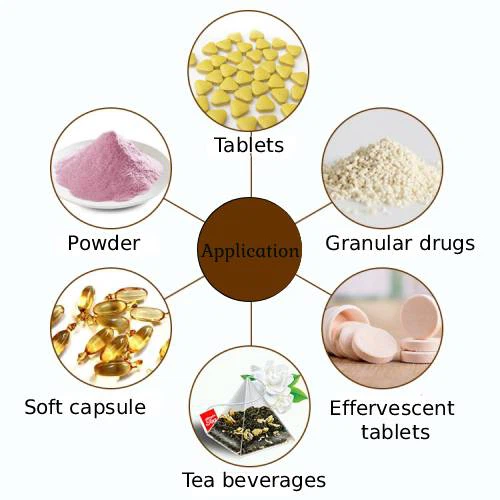
Product Types
- Phlorizin is more suitable for functional beverages, meal replacement powders, and lightweight blood sugar control products.
- Bitter melon extract is suitable for capsules, tablets, and compound blood sugar regulation products.
Formulation Compatibility
- Phlorizin is often used in combination with mulberry leaf extract, bitter melon extract, or polyphenols.
- Bitter melon extract can be combined with polysaccharides, dietary fibre, or antioxidants to form a comprehensive regulatory system.
Furthermore, from a supply chain and cost perspective, due to its limited sources, Phlorizin is relatively expensive; bitter melon extract, however, is mature in terms of large-scale production and offers a clear price advantage. B2B clients may select the appropriate raw material based on product positioning, or consider combination formulations to achieve the dual effect of 'precise blood sugar control + multi-pathway regulation'.
For B2B procurement and brand developers, the choice of raw material should be aligned with product strategy:
- If the product emphasises innovative mechanisms and differentiation, Phlorizin is the preferred option. Their precise blood sugar-regulating effects can serve as a core selling point, helping to establish a premium blood sugar management concept.
- If the product emphasises clinical validation and market acceptance, bitter melon extract is a more prudent choice; its multi-targeted action and established supply chain facilitate rapid market entry and consumer recognition.
Reference
[1]Fan M, Kim EK, Choi YJ, Tang Y, Moon SH. The Role of Momordica charantia in Resisting Obesity. Int J Environ Res Public Health. 2019 Sep 4;16(18):3251. doi: 10.3390/ijerph16183251.
[2] Nadkarni N., D'Cruz S., Sachdev A. Hematemesis due to bitter melon (Momordica charantia) extract-induced gastric ulcerations. Indian J. Gastroenterol. 2010;29:43–44. doi: 10.1007/s12664-010-0009-0.
[3]Xu B, Li Z, Zeng T, Zhan J, Wang S, Ho CT, Li S. Bioactives of Momordica charantia as Potential Anti-Diabetic/Hypoglycemic Agents. Molecules. 2022 Mar 28;27(7):2175. doi: 10.3390/molecules27072175.
[4]Bortolotti M, Mercatelli D, Polito L. Momordica charantia, a Nutraceutical Approach for Inflammation-related Diseases. Front Pharmacol. 2019 May 8;10:486. doi: 10.3389/fphar.2019.00486.
[5]Ye C, Yan C, Bian SJ, Li XR, Li Y, Wang KX, Zhu YH, Wang L, Wang YC, Wang YY, Li TS, Qi SH, Luo L. Momordica charantia L.-derived exosome-like nanovesicles stabilize p62 expression to ameliorate doxorubicin cardiotoxicity. J Nanobiotechnology. 2024 Aug 2;22(1):464.