

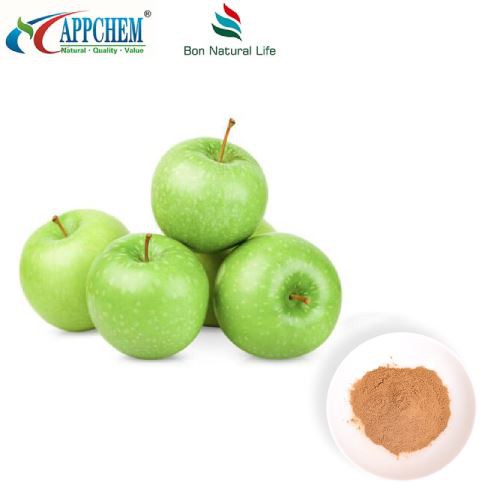
What Is the Product Overview?
Apple Extract Procyanidin B2 Powder is a natural flavonoid polyphenolic compound extracted from the fruit of the apple tree (Malus domestica). It is an active ingredient possessing potent antioxidant, anti-inflammatory, and anti-allergic bioactivities. Procyanidin B2 finds extensive application across multiple industries, including functional foods, nutritional supplements, pharmaceutical raw materials, and skincare products.
This product is supplied directly from the original manufacturer with immediate dispatch guaranteed. As a bulk supply solution, it meets global high-volume requirements. As a direct manufacturer and supplier, we oversee every stage from raw material sourcing, extraction, processing, to final dispatch, ensuring consistent quality, batch uniformity, and efficient delivery cycles. As a bulk-supplied raw material, our Apple Extract Procyanidin B2 Powder offers clients:
- 1%-10% Procyanidin B2
- Traceable batch management
- Consistent product quality
- Rigorous testing and compliance support
Our objective is to provide reliable, cost-effective raw material supply solutions for enterprises in the global functional food, nutritional health, and cosmetics sectors.
PS: This page focuses on the Integrated Supply Chain & Solutions.
For product application information, please click Antioxidant Ingredient Procyanidin B2 Powder.
For the product Technical Data Sheet, please click Apple Extract Procyanidin B2 HPLC Test 29106-49-8.
What Are the Core Challenges and Scientific Responses in Proanthocyanidin B2 Industrialization?
As a characteristic dimer among oligomeric proanthocyanidins, proanthocyanidin B2 has been extensively studied in academia for its molecular structure and biological activity. However, transitioning from laboratory research to large-scale commercial application still faces several critical industrial-scale conversion bottlenecks.
Challenge One: Molecular Structural Characteristics of Dimers and Their Fundamental Differences from Monomers/Polymers
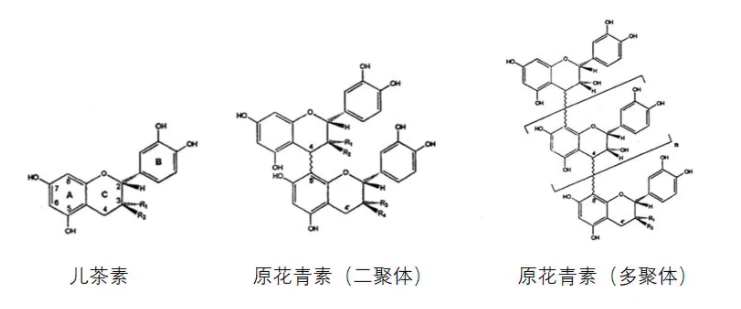
Procyanidin B2's defining feature lies in its dimeric structure, formed by two epicatechin units linked via a C4-C8 bond. This structural feature determines its dual uniqueness in efficacy and application:
- Molecular Basis for Efficacy Advantage: Compared to monomers (e.g., catechin, epicatechin), procyanidin B2's dimeric structure provides more phenolic hydroxyl sites, significantly enhancing its free radical scavenging capacity. Research indicates proanthocyanidin B2 exhibits antioxidant activity 3-5 times greater than vitamin C or vitamin E. Compared to high-polymerisation proanthocyanidins (polymers with polymerisation degree >5), the dimer's moderate molecular weight (578.52) maintains high activity while offering superior biological membrane permeability.
- Core Quality Control Challenges: As a dimer, proanthocyanidin B2 faces two critical challenges during extraction and storage:
1. Polymerisation Stability: Under improper extraction conditions (high temperatures, strong acids/bases) or storage environments (light exposure, humidity), dimers may undergo further polymerisation, converting into trimers, tetramers, or higher polymers. This leads to reduced active ingredient content and altered activity profiles.
2. Isomer interference: The proanthocyanidin family contains multiple dimeric isomers (e.g., B1, B2, B3, B4) with similar structures but differing activities. If separation and purification processes fail to accurately identify and enrich the B2 type, this results in products with "artificially high purity" but "insufficient activity".
For B-end clients, this implies: when procuring proanthocyanidin B2, focusing solely on "total proanthocyanidin content" or "HPLC purity figures" is insufficient. Accurate isomeric characterisation, integrity of dimeric structures, and stability of polymerisation distribution across batches are critical variables determining the consistent efficacy of the end product.
Our scientific response and product solution
As the source manufacturer, we employ low-temperature directional extraction coupled with multi-stage chromatography technology to achieve precise enrichment and purification of proanthocyanidin B2:
- Isomer-Specific Enrichment: Our systematically optimised purification process selectively isolates B2 dimers from apple polyphenol complexes, effectively eliminating interference from other isomers such as B1 and B3. This ensures a distinct main peak in HPLC spectra with ≥98% purity.
- Polymerisation Stability Control: The entire production process employs low temperatures (<40°C) and inert gas protection to minimise polymerisation or degradation of dimers during processing. This guarantees the product's "true purity" rather than merely "apparent purity".
The Synergistic Challenge of Bioavailability Advantages and Application Compatibility
Proanthocyanidin B2, as a representative oligomeric proanthocyanidin, exhibits significantly superior bioavailability compared to higher-polymeric multimers. Research indicates that its dimeric structure possesses a moderate molecular weight (578.52), enabling penetration of the blood-brain barrier and blood-retinal barrier, with effective distribution within vascular tissues, neural pathways, and metabolically active organs. Nevertheless, this advantage faces translational challenges in practical applications:
- Individual Variability in Oral Absorption: The absorption efficiency of proanthocyanidin B2 is influenced by factors such as gut microbiota, coexisting food matrices, and formulation design, potentially leading to orders-of-magnitude differences in bioavailability between formulations.
- Dose-Dependent Target Effects: Different functions, such as antioxidant, anti-inflammatory, and vascular protection, require distinct effective doses, necessitating dose design based on clearly defined target mechanisms.
- Scientific Basis for Synergistic Formulations: Proanthocyanidin B2 may exhibit synergistic effects with vitamin C, vitamin E, or other polyphenolic compounds (e.g., chlorogenic acid, geniposidic acid). However, formulation ratios and dosage designs require robust data support.
For B2 clients, this implies: the "high potency" of proanthocyanidin B2 represents potential rather than guaranteed outcomes. Delivering efficacy from raw material procurement to end-product requires navigating the full chain of challenges: formulation design, stability validation, in vivo absorption, and target action.
Our scientific response and product solutions
- Specification Grading and Precision Matching: We provide differentiated recommendations based on client application scenarios:
≥10% Specification: Suitable for high-potency systems (e.g., pharmaceutical intermediates, premium skincare, precision nutritional supplements) requiring explicit dose-response relationship validation in R&D projects.
Medium-to-Low Concentration Specifications: Ideal for formulations balancing cost and efficacy (e.g., functional foods, basic dietary supplements) or as components in synergistic polyphenol blends with proanthocyanidin B2.
- Application Data Sharing: Drawing upon our application laboratory's accumulated knowledge, we provide foundational formulation support, including solubility parameters in diverse solvent systems, pH stability curves, and compatibility data with common excipients for Proanthocyanidin B2.
- Synergistic Formulation Recommendations: Our technical team offers guidance on synergistic applications of Proanthocyanidin B2 with Vitamin C/E and other polyphenolic compounds, empowering clients to develop differentiated end products.
What Is the Spot Goods and Sample Service Policy?
| Project | Details |
| Minimum Sample Quantity | Starting from 10g-20g (50g or 100g specifications available upon request) |
| Sample Cost | Free samples provided during the R&D phase for new clients (shipping costs borne by the client) or a nominal charge |
| Sample Delivery Time | Stock samples dispatched within 3-5 working days |
| Accompanying Documentation | Certificate of Analysis (COA) for the corresponding batch (including HPLC spectrum) and Material Safety Data Sheet (MSDS) provided |
| Stock Availability | Regular kilogram to ten-kilogram stock maintained for rapid dispatch |
| Bulk Supply | Minimum order 25kg, delivery within 4-6 weeks (expedited options negotiable) |
| Sample Application Support | Supports content verification, solubility testing, formulation pre-research, stability studies, and efficacy validation pilot trials |
What Is the Cooperation Process and Logistics Packaging?
Our Service Processes
Our free service hotline:88346301
Pre-sales Consultancy
1
>>
Confirmation of order
2
>>
Production
3
>>
Multi-Channel Shipping
4
>>
Confirmation of receipt
5
>>
After-sale Services
6
- Consultation and Requirement Confirmation: Clients contact via the website enquiry form or directly by email/telephone, providing application details, target specifications (primarily 6%, other specifications negotiable), sample requirements, and projected usage volume.
- Sample Provision and Technical Support: Enquiries responded to within 24 hours, with samples and corresponding batch COAs dispatched as required. Preliminary technical consultation initiated for complex applications.
- Commercial Negotiation and Agreement Signing: Competitive quotations and supply schedules are provided based on purchase volume, packaging, and logistics requirements. Multiple payment methods accepted, including Telegraphic Transfer (T/T) and Letter of Credit (L/C).
- Production Scheduling and Rigorous Quality Control: Upon order confirmation, stock orders are dispatched within 3-5 working days. Customised or bulk orders require a 4-6 week production lead time, with comprehensive pre-shipment quality inspections conducted.
- Professional Packaging and Global Logistics:
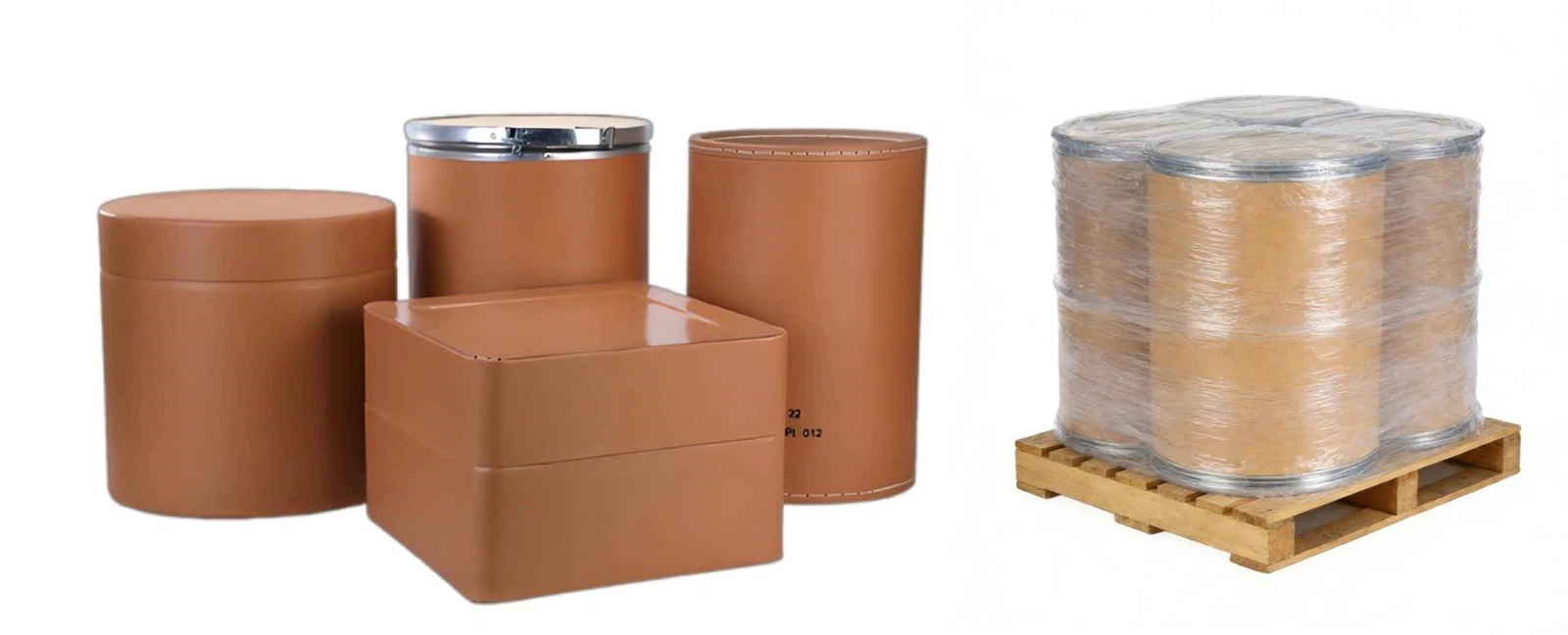
- Packaging Specifications: Standard inner packaging comprises 1kg aluminium foil bags (lined with sterile bags, vacuum-sealed with nitrogen) housed in moisture-proof cardboard drums. Bulk orders utilise 25kg cardboard drum packaging. Customised packaging available upon request.
- Logistics Services: We maintain stable partnerships with international logistics giants, including DHL, FEDEX, and UPS, offering door-to-door delivery services. Overseas warehouse stocking services are available in core market regions to shorten delivery cycles.
- Estimated Delivery Times:
- Sample orders: 3-5 working days
- Small-batch stock orders: 3-7 days
- Bulk orders: Air freight: 5-8 days; Sea freight: 15-30 days (subject to destination)
Delivery and Ongoing Support: Complete customs clearance documentation provided with shipment. Full logistics tracking available. Post-delivery monitoring of customer usage with ongoing technical consultation as required.
What Is In-Stock Availability and Inventory Management?
Advantages of In-Stock Availability
We understand that timely supply and flexible inventory allocation are paramount, particularly in B2B procurement. Our Apple Extract Procyanidin B2 Powder is available from stock, offering the following advantages:
- Immediate Availability: Ready to fulfil urgent orders at any time
- Flexible Allocation: Supply volumes can be adjusted to meet customer requirements, minimising inventory pressure
- Guaranteed Rapid Delivery: Shipment within 3–5 working days of order confirmation, accommodating tight production schedules
- Uninterrupted Supply: Ensures long-term stable inventory to fulfil bulk requirements
- Regular Stock Replenishment: Continuously updates inventory and replenishes production to meet diverse customer procurement needs
Our stock inventory resolves supply instability issues during production cycles, ensuring efficient raw material procurement for customers. It is particularly suited for large-scale purchasers requiring stable supply and urgent delivery, offering enhanced flexibility and assurance, especially during raw material shortages or tight production schedules.
Inventory Cycle and Stocking Plan
Our maintained spot inventory covers multiple specifications, ensuring timely dispatch according to diverse customer requirements. Monthly inventory updates and replenishments are conducted based on market demand and historical orders to sustain continuous supply capacity. As a direct manufacturer and supplier, we possess the capability to provide high-quality raw materials under direct control, with rigorous oversight at every stage:
- Direct quality control: Minimising intermediary involvement ensures batch stability and consistency
- Reduced procurement costs: Streamlining the supply chain lowers procurement expenses for clients
- Enhanced responsiveness: Direct factory sourcing accelerates order processing and transit times, shortening delivery cycles
- Traceable production: Every batch is traceable to raw material origins and processing stages, providing comprehensive quality tracking records
How Does Logistics and Packaging Work for Bulk Supply?
Logistics System
- Sea Freight (FCL / LCL): Suitable for orders exceeding 500kg, offering stable costs and ideal for annual contract clients.
- Air freight: Used for R&D samples or urgent replenishment.
- DAP / DDP / FOB / CIF: Offering diverse liability allocation schemes based on clients' import experience and customs clearance capabilities.

Cycle Forecasting and Risk Control
- Standard production cycle: 2–4 weeks
- Sea freight cycle: 20–40 days (region-dependent)
- Air freight lead time: 5–10 days
Risk control measures include:
- Palletised loading
- Moisture-proof inner packaging
- Factory moisture re-inspection
- Delay contingency communication protocols
Packaging Solutions
To guarantee raw material stability and transport safety, Apple Extract Procyanidin B2 Powder is standardly packaged as follows:
- Inner Packaging: Food-grade aluminium foil pouches (moisture-proof, oxidation-resistant)
- Outer Packaging: Industrial-grade cardboard drums (25kg per drum)
Each packaging unit bears a detailed batch number, production date, and net weight labelling to support customer inventory management and product traceability.
FAQ
Q1: What is the difference between Procyanidin B2 (CAS 29106-49-8) and ordinary OPC (Oligomeric Proanthocyanidins)?
A1: Ordinary OPCs (Oligomeric Proanthocyanidins) typically denote a mixture of oligomeric proanthocyanidins, comprising components of various degrees of polymerisation such as dimers, trimers, and tetramers. Among these, Procyanidin B2 is the most representative dimeric active component within OPCs. For formulations requiring broad-spectrum antioxidant activity and a balanced cost-effectiveness profile, OPC complexes may be selected.
Q2: What is the source of your proanthocyanidin B2? How does apple-derived differ from other sources (e.g., grape seed)?
A2: Our proanthocyanidin B2 is primarily sourced from apple (Malus domestica) peel or young fruit. Apple-derived proanthocyanidin B2 exhibits the following characteristics: 1) Excellent synergistic compatibility with other components in apple polyphenolic complexes (e.g., chlorogenic acid, rhein); 2) Typically higher proportion of oligomers, offering distinct bioavailability advantages. Grape seeds are also a common source of procyanidin B2. While chemically identical, they exhibit differing impurity profiles and synergistic components, allowing selection based on formulation requirements.
Q3: What are the minimum order quantity (MOQ) and lead time?
A3: The standard product MOQ is 25 kilograms, while the sample order MOQ is 10 grams. Stock orders can be dispatched within 3-7 days, whilst customised or bulk orders have a lead time of 4-6 weeks following contract commencement. Specific timings depend on order volume, specifications, and destination.
Q4: How can the formulation stability of proanthocyanidin B2 be improved?
A4: Based on our application testing data, we recommend:
1) Avoiding high-temperature processing (recommended <60°C);
2) Avoiding direct contact with strong oxidising agents, strong acids or strong alkalis;
3) Employing cyclodextrin inclusion complexes or liposomal encapsulation technology can significantly enhance its stability in aqueous systems. We can provide stability data support tailored to different dosage forms.
Reference
[1]Dasiman R, Nor N M, Eshak Z, et al. A review of procyanidin: Updates on current bioactivities and potential health benefits[J]. Biointerface Res. Appl. Chem, 2022, 12(5): 5918-5940.
[2] Xu Q, Fu Q, Li Z, et al. The flavonoid procyanidin C1 has senotherapeutic activity and increases lifespan in mice. Nat Metab. 2021;3(12):1706-1726. doi:10.1038/s42255-021-00491-8
[3]Zheng W, Li H, Go Y, Chan XHF, Huang Q, Wu J. Research Advances on the Damage Mechanism of Skin Glycation and Related Inhibitors. Nutrients. 2022;14(21):4588. Published 2022 Nov 1. doi:10.3390/nu14214588
[4] Gu L, House SE, Wu X, Ou B, Prior RL. Procyanidin and catechin contents and antioxidant capacity of cocoa and chocolate products. J Agric Food Chem. 2006 May 31;54(11):4057-61.


