


Is This Bulk Apple Polyphenols Powder Direct from the Manufacturer?
Apple Polyphenols Powder is a polyphenolic complex extracted from apples (Malus domestica), primarily comprising active components such as catechins, proanthocyanidins, chlorogenic acids, and dihydrochalcones (e.g., geniposide). Unlike market-based trading distributors, this product adopts an Original Factory model for global B2B clients, emphasising full process control from raw material sourcing, extraction, concentration, drying, and finished product packaging. Unlike trade suppliers, we provide:
- Traceable raw material sourcing management
- Consistent batch quality control
- Annual procurement capacity planning
- Production capability supporting tonnage-level orders
- Comprehensive compliance documentation support
This product is suitable for:
- Functional foods and solid beverages
- Nutritional supplements
- Sports nutrition formulations
- Functional food additives
- Plant extract redistribution systems
PS: This page focuses on the Integrated Supply Chain & Solutions.
For product application information, please click AGA Hair Health Ingredient Apple Polyphenols Powder.
For the product Technical Data Sheet, please click Apple Polyphenols Powder UV70% Patented Product.
Commercialising Apple Polyphenols: Core Challenges & Scientific Responses?
As a complex natural active ingredient, apple polyphenols encounter several critical industrial-scale conversion bottlenecks during their transition from laboratory research to large-scale commercial application. Deeply understanding and resolving these bottlenecks is fundamental to distinguishing "ordinary extracts" from "commercial-grade raw materials" – and represents the core value we deliver as a source manufacturer.
Challenge One: The Profound Correlation Between Proanthocyanidin Polymerisation Distribution and Efficacy Expression
Proanthocyanidins, one of the core active components in apple polyphenols, exhibit a notably broad polymerisation distribution range. Industry research indicates that proanthocyanidins within apple polyphenols predominantly fall within a polymerisation degree of 2 to 6, categorising them as oligomers. This structural characteristic carries dual significance:
- Efficacy Advantage: Oligomeric proanthocyanidins (particularly dimers and trimers) represent the truly absorbable forms within the human body, exhibiting significantly higher bioavailability than higher-polymeric multimers. The abundance of oligomers such as proanthocyanidins B1, B2, and C1 in apple polyphenols confers superior antioxidant and free-radical-scavenging capabilities compared to those of polyphenols from many other sources.
- Quality Control Challenges: Polymerisation distribution directly influences a product's antioxidant potency and efficacy performance. Traditional extraction processes that fail to maintain oligomer ratios consistently result in significant batch-to-batch efficacy variations, undermining downstream clients' ability to establish stable product efficacy claims.

For B2B clients, this implies: Focusing solely on "total polyphenol content" during raw material procurement is insufficient. The polymerisation distribution and oligomer ratio of proanthocyanidins are critical variables determining the consistency of end-product efficacy. If raw material quality control fails to address molecular weight distribution, R&D teams will struggle to replicate efficacy data reported in the literature.
Our Scientific Response and Product Solution
As a source manufacturer, we employ membrane separation coupled with chromatography to achieve targeted enrichment and standardised control of proanthocyanidin polymerisation. Our technical team possesses an in-depth understanding of efficacy differences across varying polymerisation components, enabling us to provide clients with:
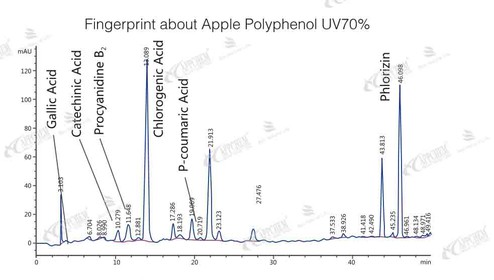
- Characteristic Spectrum Assurance: Each batch supplies HPLC fingerprint spectra, guaranteeing stable ratios of key constituents such as procyanidin B2, chlorogenic acid, and geniposidic acid. This ensures not only compliance with total polyphenol standards but also consistency in the active spectrum.
- Polymerisation Distribution Data: Upon request, we furnish analytical data detailing proanthocyanidin polymerisation distribution (e.g., monomer to hexamer ratios), providing foundational support for efficacy research.
Challenge Two: Standardisation and Batch Consistency of Polyphenolic Complexes
Apple polyphenols constitute a complex mixture containing over ten types of phenolic compounds. Significant variations exist in the polyphenolic composition of raw apple materials across different varieties, origins, and ripeness levels. Research indicates that unripe apples contain approximately ten times the polyphenol content of ripe fruit, with markedly distinct compositional profiles.
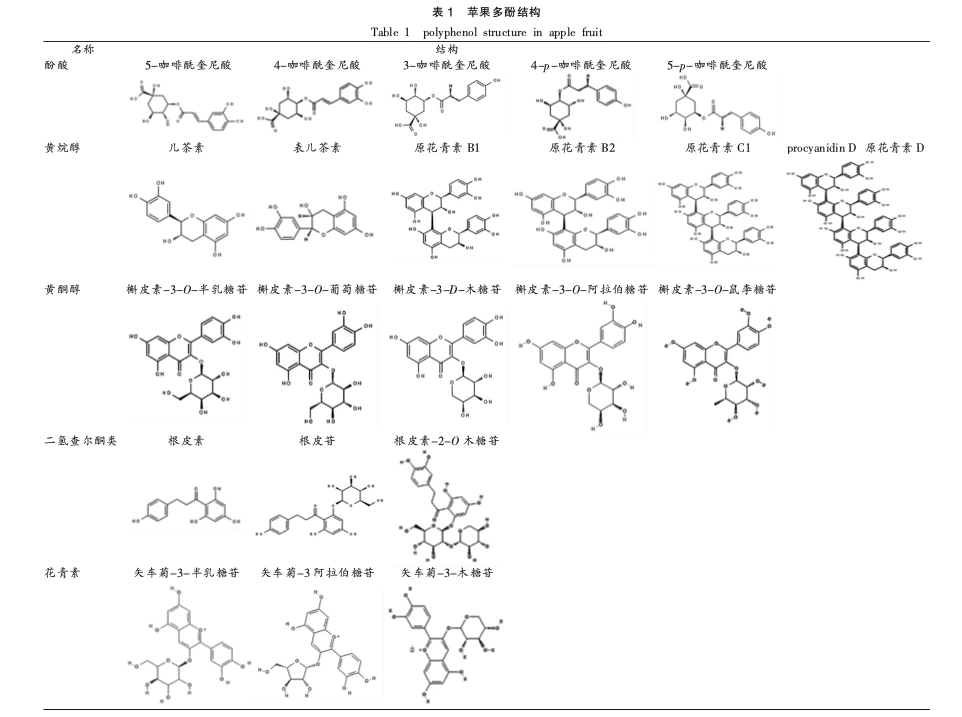
This presents two critical industrial challenges:
- Raw Material Dependency: If sourcing is inconsistent, the extract's composition will fluctuate with seasonal and regional variations, directly compromising the predictability of end-product efficacy and stability.
- Testing Method Discrepancies: Significant variations may arise when different enterprises employ UV (ultraviolet spectrophotometry) and HPLC (high-performance liquid chromatography) to measure polyphenol content. The lack of linear correlation between total polyphenol content measured by UV and specific component concentrations determined by HPLC complicates quality acceptance for clients.
For B2B clients, this implies: the stability of a supplier's raw material sourcing, transparency in testing methodologies, and comparability of compositional profiles are more critical decision factors than "price". Minor variations in product colour, solubility, or efficacy following supplier changes may stem from differences in polyphenolic composition.
Our Scientific Response and Product Solutions
- Dedicated Raw Material Base Assurance: We maintain long-term partnerships with apple orchards in specific growing regions, prioritising unripe green apples as raw material to ensure sourcing stability and naturally superior polyphenolic content.
- Dual-Standard Testing System: We concurrently provide UV-measured total polyphenol content and HPLC-determined characteristic component levels (chlorogenic acid, procyanidin B2, phloretin, etc.), enabling clients to clearly understand both the "total quantity" and "component profile" of the raw material. Corresponding component profile standards exist for different product specifications (e.g., 60%, 70%).
- Process Standardisation Ensures Consistency: Our systematically validated low-temperature extraction and gradient purification processes reliably enrich target bioactive compounds, guaranteeing fingerprint similarity >0.95% across production batches.
Sample Service: How Does Factory Direct Supply Work?
As a primary manufacturing facility, we have established a robust sample service and quality assurance system.
Sample Service Policy
| Item | Details |
| Minimum Sample Quantity | 50g (100g or 500g specifications available upon request) |
| Sample Cost | Free samples for new clients during the R&D phase (shipping costs borne by the client) or a nominal charge |
| Sample Delivery | Time In-stock samples dispatched within 3-5 working days |
| Accompanying Documentation | Certificate of Analysis (COA) for corresponding batch (including dual UV/HPLC data), Material Safety Data Sheet (MSDS) ... |
| Sample Application Support Support | Solubility testing, formulation pre-research, stability studies, sensory evaluation, and efficacy validation pilot trials |
Original Factory Capability Statement
- Production Capacity
- Monthly output: Several tonnes
- Supports long-term annual contract supply
- Production scheduling based on customer forecasts
- Scalability and supply chain security: Possesses annual production capacity exceeding metric tonnes and spot inventory reserves, ensuring reliable, flexible bulk supply to meet global market demand

- Quality Control System
- Raw material pesticide residue testing
- Heavy metal testing
- Microbiological testing
- Certificate of Analysis (COA) per batch
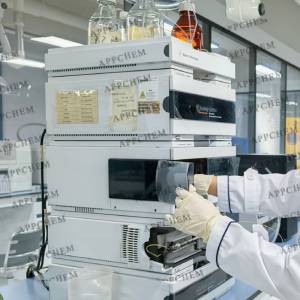
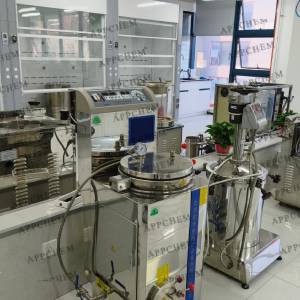
- Source production with quality control: Our integrated production base spans raw material procurement to modern extraction and purification, achieving an annual capacity exceeding 50 tonnes. The facility is equipped with High-Performance Liquid Chromatography (HPLC), Ultraviolet Spectrophotometer (UV), and other analytical instruments, strictly adhering to ISO 9001, ISO 22000, and cGMP quality management systems.

- Regulatory Compliance and Documentation Support
- Certificate of Analysis (COA)
- Material Safety Data Sheet (MSDS)
- Certificate of Origin
- Inspection Documentation
Comprehensive Regulatory and Documentation Support: We provide full supporting documentation, including, but not limited to, COA, MSDS, Technical Data Sheet (TDS), full heavy metal and microbiological testing
How Does the Collaboration Process Work?
Our Service Processes
Our free service hotline:88346301
Pre-sales Consultancy
1
>>
Confirmation of order
2
>>
Production
3
>>
Multi-Channel Shipping
4
>>
Confirmation of receipt
5
>>
After-sale Services
6
- Consultation and Requirements Confirmation: Clients contact us via the website enquiry form or directly by email/telephone, providing application details, target specifications (60%, 70%, 80%), sample requirements, and projected usage volumes.
- Sample Provision and Technical Support: Enquiries receive a response within 24 hours. Samples and corresponding batch COAs are dispatched as requested. For complex applications, preliminary technical consultations may be initiated.
- Commercial Negotiation and Agreement Signing: Competitive quotations and supply schedules are provided based on purchase volume, packaging, and logistics requirements. Multiple payment methods accepted, including Telegraphic Transfer (T/T) and Letter of Credit (L/C).
- Production Scheduling and Rigorous Quality Control: Upon order confirmation, standardised production commences with comprehensive pre-shipment quality inspections. Sample orders dispatch within 3-5 working days; small-batch orders (e.g., under 25kg) ship from stock within 3-7 days; bulk orders require a 4-6 week production lead time.
How Does the Bulk Supply Logistics System Operate?
Logistics Strategy for Bulk Supply
In B2B raw material supply, the logistics design objective is not "fastest delivery", but rather: Predictable lead times.
- Stable cost structure
- Manageable risks
- Traceable batch integrity
We employ a three-stage coordination mechanism-"production scheduling + factory inspection release + logistics interface"-to prevent quality risks arising from warehousing delays or ad hoc scheduling.

Multi-Transportation Solution Support
✔ Sea Freight (FCL / LCL): Suitable for orders exceeding 500kg, offering stable costs and ideal for annual contract clients.
✔ Air freight: Used for R&D samples or urgent replenishment.
✔ DAP / DDP / FOB / CIF: Offering diverse liability allocation schemes based on clients' import experience and customs clearance capabilities.
Cycle Forecasting and Risk Control
Standard production cycle: 2–4 weeks
Sea freight cycle: 20–40 days (region-dependent)
Air freight lead time: 5–10 days
Risk control measures include:
- Palletised loading
- Moisture-proof inner packaging
- Factory moisture re-inspection
- Delay contingency communication protocols
Customs Clearance & Documentation Support
- Certificate of Analysis (COA)
- Material Safety Data Sheet (MSDS)
- Certificate of Origin
- Packing List
- Commercial Invoice
Ensuring import compliance across diverse jurisdictions.
We avoid overpromising ultra-short lead times, instead emphasising: stable routes, fixed freight forwarder partnerships, long-term delivery track record, and establishing authentic and credible supply chain performance.
What Makes the Packaging System Industrial-Grade?
Packaging Design Objectives
- Oxidation resistance
- Moisture resistance
- Light resistance
- Shock resistance
- Suitability for long-distance maritime transport
Multi-layer Packaging Structure and Principles
First layer: Food-grade aluminium foil pouch (barrier against oxygen and water vapour)
Second layer: Cushioning material (shock absorption)
Third layer: 25kg industrial paperboard drum or fibre drum
Optional nitrogen flushing for select clients to further mitigate oxidation risk.
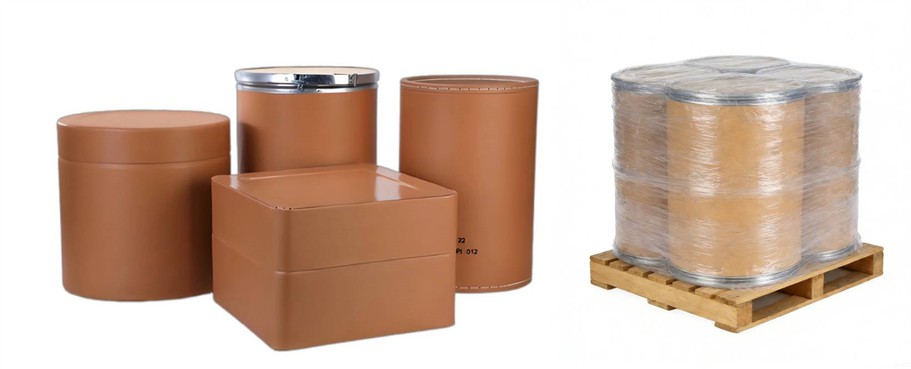
Batch Identification and Labelling System
Per drum labelling:
- Product name
- Specification
- Batch number
- Production date
- Net weight
(Supports client ERP batch integration)
Custom Packaging Parameters Supported
- capacities: 5kg / 10kg / 25kg
- Customer Labelling
- Multilingual Versions
However, excessive customisation compromising the original structural integrity is not supported.
What Are the Synergistic Components and Product Matrix?
Apple polyphenols form a vital component of our core product line. To assist you in developing more innovative and competitive end products, we recommend concurrently considering the following synergistic or homologous products:
| Product Category | Key Ingredient | Primary Application Areas |
| Phloridzin | 40%-98% | Blood glucose management, SGLT inhibitor research, functional foods |
| Phloretin | 10%-98% | Brightening, antioxidant, transdermal absorption formulations |
| Chlorogenic Acid | 30%-50% | Metabolic Health, Weight Management, Antioxidant |
| Other Synergistic Ingredients | Resveratrol, Arbutin, VC Derivatives | Blended formulations for synergistic skin-brightening, anti-ageing, and antioxidant |
Reference
1. Takahashi T, Kamiya T, Hasegawa A, Yokoo Y. Procyanidin oligomers selectively and intensively promote proliferation of mouse hair epithelial cells in vitro and activate hair follicle growth in vivo. J Invest Dermatol. 1999 Mar;112(3):310-6. doi: 10.1046/j.1523-1747.1999.00532.x. PMID: 10084307.
2. Nagasako-Akazome Y. Serum cholesterol-lowering effect of apple polyphenols in healthy subjects. J Oleo Sci. 2005;54(3):143-51.
3. Takahashi T, Kamimura A, Kagoura M, Toyoda M, Morohashi M. Investigation of the topical application of procyanidin oligomers from apples to identify their potential use as a hair-growing agent. J Cosmet Dermatol. 2005 Dec;4(4):245-9. doi: 10.1111/j.1473-2165.2005.00199.x. PMID: 17168871.
4. Lotito SB, Frei B. Relevance of apple polyphenols as antioxidants in human plasma: contrasting in vitro and in vivo effects. Free Radic Biol Med. 2004 Jan 15;36(2):201-11. doi: 10.1016/j.freeradbiomed.2003.10.005. PMID: 14744632.
5. Badolati, N.; Sommella, E.; Riccio, G.; Salviati, E.; Heintz, D.; Bottone, S.; Di Cicco, E.; Dentice, M.; Tenore, G.; Campiglia, P.; Stornaiuolo, M.; Novellino, E. Annurca Apple Polyphenols Ignite Keratin Production in Hair Follicles by Inhibiting the Pentose Phosphate Pathway and Amino Acid Oxidation. Nutrients 2018, 10, 1406. https://doi.org/10.3390/nu10101406
6. Zillich, O.V., Schweiggert-Weisz, U., Eisner, P. and Kerscher, M. (2015), Polyphenols as active ingredient.


