

In the realms of natural anti-inflammatory agents and joint health, Cat's Claw Extract and Frankincense Extract have long been incorporated into formulations for joint relief, chronic inflammation management, and athletic recovery. Both derive from traditional botanical medicine systems, yet exhibit distinct differences in their active constituent profiles, anti-inflammatory pathways, bioavailability, and clinical research focus. For procurement managers and formulation engineers engaged in joint health product development, understanding the molecular mechanisms and evidence-based distinctions between these two compounds aids in defining product positioning and determining combination strategies.
How Do Their Active Compounds and Anti-Inflammatory Mechanisms Differ?
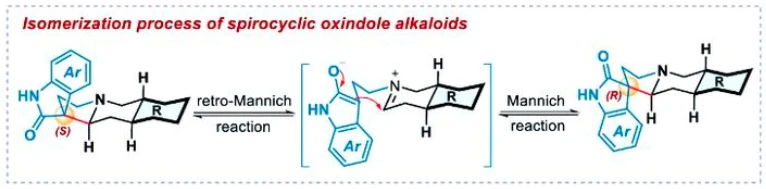
- Cat's Claw extract is primarily derived from the South American plant Uncaria tomentosa, whose core active constituents comprise oxindole alkaloids, polyphenols, and triterpenoids. According to a 2021 study in the Journal of Ethnopharmacology, oxindole alkaloids in cat's claw exert systemic anti-inflammatory effects by inhibiting the NF-κB signalling pathway, thereby reducing the expression of inflammatory mediators such as TNF-α and IL-1β. The research indicates its potential value in immunomodulation during chronic inflammatory states, thus aligning more closely with an "immunomodulatory anti-inflammatory" approach.
- Frankincense extract primarily derives from Boswellia serrata resin, with its key active constituents being boswellic acids, particularly AKBA (3-O-acetyl-11-keto-β-boswellic acid). According to a 2022 study in Phytomedicine, boswellic acids reduce inflammatory responses by selectively inhibiting 5-lipoxygenase (5-LOX), thereby decreasing leukotriene production. Compared to cat's claw, frankincense tends to directly intervene in the pathways of inflammatory mediator generation, thus exhibiting a more "targeted inhibition" characteristic in its anti-inflammatory mechanism.
How Do Their Clinical Benefits Compare in Joint Health Applications?
- In the field of joint health, cat's claw extract is predominantly used to alleviate mild to moderate joint discomfort and support the management of immune-related inflammation. A clinical observation published in Inflammation Research in 2020 indicated that eight weeks of continuous supplementation with cat's claw extract improved joint flexibility and morning stiffness in subjects, though the effects manifested progressively over time, making it suitable for long-term maintenance products.
- Frankincense extract, conversely, possesses more concentrated and definitive clinical data within osteoarthritis research. According to a 2021 randomised double-blind trial in BMC Complementary Medicine and Therapies, a standardised extract containing 65% boswellic acid significantly reduced knee pain scores and improved WOMAC indices within six weeks. Its relatively rapid onset makes it more suitable for formulations targeting pain relief.

Thus, functionally speaking, cat's claw leans towards long-term immune modulation support, while frankincense is better suited for short-term inflammation and pain management.
What Are the Bioavailability and Formulation Considerations?
- The polyphenols and alkaloids in cat's claw exhibit good water solubility, making them suitable for capsule, tablet, and powder formulations. Extraction standards typically use the content of indole alkaloids (e.g., 3% or 5%) as a quality control indicator. According to research data from Chinese Natural Medicines in 2022, cat's claw demonstrates good stability in conventional dosage forms but is relatively sensitive to humidity. Therefore, moisture content must be controlled during packaging and storage.
- Frankincense extracts, however, exhibit limited bioavailability due to the strong lipophilicity of boswellic acids. A 2023 study in the Journal of Drug Delivery Science and Technology indicated that phospholipid complexes or microencapsulation technology can significantly enhance AKBA absorption rates. Consequently, in premium joint health products, frankincense is frequently combined with liposomes or plant phospholipids to improve absorption efficiency.
For procurement parties, attention should be paid to whether the raw material supplier provides technical support for bioavailability enhancement.
How Do Safety Profiles and Regulatory Status Compare?
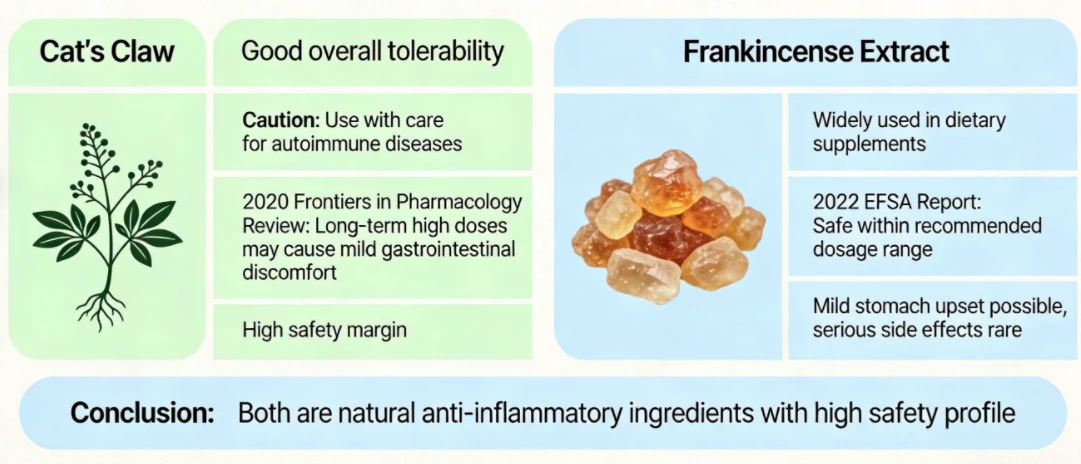
- In terms of safety, cat's claw demonstrates generally good tolerability. However, due to its immunostimulatory effects, individuals with certain autoimmune conditions should exercise caution when using it. A 2020 review in Frontiers in Pharmacology noted that high-dose, long-term use may cause mild gastrointestinal discomfort, though the overall safety margin remains high.
- Frankincense extract is widely utilised in dietary supplements across multiple countries, possessing a favourable safety profile. The 2022 assessment report by the European Food Safety Authority (EFSA) deemed standardised frankincense extract acceptable for safety within recommended dosage ranges. Some individuals may experience mild gastric discomfort, though serious adverse effects are uncommon.
Overall, both substances rank among natural anti-inflammatory ingredients with high safety ratings.
Conclusion: How Should Buyers Position Cat's Claw and Frankincense Extract in Joint Health Formulations?
In terms of mechanism of action and clinical rhythm, cat's claw extract places greater emphasis on immune modulation and chronic inflammation management, making it suitable for long-term maintenance of joint health products. Frankincense extract, with its well-defined 5-LOX inhibition mechanism and substantial clinical data on osteoarthritis, is better positioned for rapid relief of inflammation and pain. The two are not simply interchangeable but possess complementary potential in joint health product development. For professional procurement and R&D teams, a comprehensive assessment should be conducted based on target demographics, product lifecycle positioning, and formulation requirements. This evaluation should encompass the standardisation of active ingredient content, bioavailability enhancement technologies, and supply chain stability, thereby enabling the development of more competitive natural joint health solutions.
Reference
1. Peñaloza E M C, Kaiser S, Resende P E, et al. Chemical composition variability in the Uncaria tomentosa (cat's claw) wild population[J]. Química Nova, 2015, 38: 378-386.
2. Miller M J S, Ahmed S, Bobrowski P, et al. The chrondoprotective actions of a natural product are associated with the activation of IGF-1 production by human chondrocytes despite the presence of IL-1β[J]. BMC complementary and alternative medicine, 2006, 6(1): 1-10.
3. De Benedetti F, Meazza C, Oliveri M, et al. Effect of IL-6 on IGF binding protein-3: a study in IL-6 transgenic mice and in patients with systemic juvenile idiopathic arthritis[J]. Endocrinology, 2001, 142(11): 4818-4826.
4. Williams J E. Review of antiviral and immunomodulating properties of plants of the Peruvian rainforest with a particular emphasis on Una de Gato and Sangre de Grado[J]. Alternative Medicine Review, 2001, 6(6): 567-580.
5. Piscoya J, Rodriguez Z, Bustamante S A, et al. Efficacy and safety of freeze-dried cat's claw in osteoarthritis of the knee: mechanisms of action of the species Uncaria guianensis[J]. Inflammation Research, 2001, 50(9): 442-448.
6. Allen-Hall L, Arnason J T, Cano P, et al. Uncaria tomentosa acts as a potent TNF-α inhibitor through NF-κB[J]. Journal of Ethnopharmacology, 2010, 127(3): 685-693.
7. Mammone T, Åkesson C, Gan D, et al. A water-soluble extract from Uncaria tomentosa (Cat's Claw) is a potent enhancer of DNA repair in primary organ cultures of human skin[J]. Phytotherapy Research: An International Journal Devoted to Pharmacological and Toxicological Evaluation of Natural Product Derivatives, 2006, 20(3): 178-183.
8. Caldas L Q A, Olej B, Slomp H, et al. Uncaria tomentosa in the treatment of the herpes labialis: randomised double-blind trial[J]. DST j. bras. Doenças sex. transm, 2010: 57-59.