

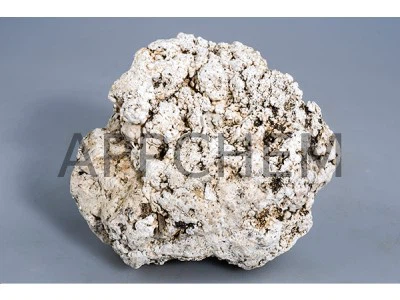
There is still controversy over the exact source of ambergris. The generally accepted view is that ambergris is a secretion from the sperm whale. After swallowing a hard object, the sperm whale's intestines secrete oil and other substances to wrap the foreign object for self-protection, and then excrete it through the digestive system or by vomiting. The released substances are the stones we call ambergris. These lumps or stones float on the sea because they are lighter than seawater. Their weight ranges from a few kilograms to hundreds of kilograms. These lumps or stones, exposed to the salt and alkali in the ocean, naturally saponify and eventually form ambergris.
However, records of ambergris's origin vary in ancient Chinese books.
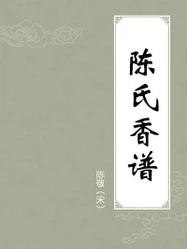
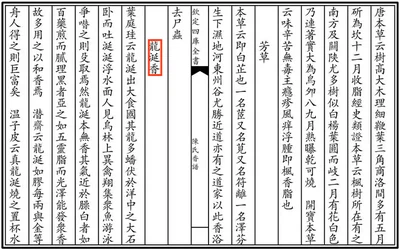
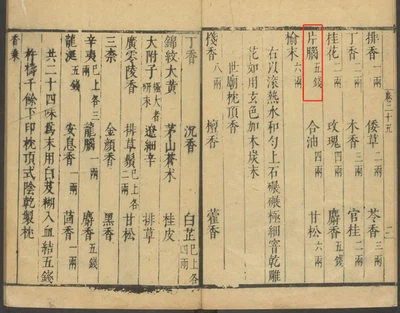
One theory comes from "Chen's Incense Book". According to the book, if you sail west of Sumatra for a day and a night, you can see an island called Ambergris Island. There are a large number of dragons living here. When the dragons swim in the sea, there will be clouds and waves. Every spring, groups of dragons play and frolic, and the saliva that spills from their mouths turns into ambergris. (The Chinese name of ambergris is longxianxiang, where "龙" means dragon and "涎" means saliva.) In the entire "Chen's Incense Book", there are 26 incense recipes with "Ambergris" in the title, and only 3 of them use ambergris. This is because ordinary people in ancient times could not afford luxury goods such as real ambergris, so they had to use synthetic ambergris. This is what we now call "gufahexiang", which means the ancient method of synthesizing incense. Regarding the identification of ambergris, the ancients also employed distinctive methods. Wen Zipi said, "If you burn real ambergris and put a cup of water on the side, the smoke will enter the water, while the fake one will disperse. Try it and it works."
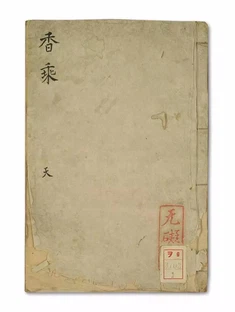
Another theory comes from a book named Xiangcheng. According to the book, there is a seashore flower resembling a hibiscus, called the ambergris flower. When the ambergris flower matures, it will fall into the sea, and big fish will swallow the flower that falls into the seawater. However, after the fish swallows the flower, they will feel bloated and uncomfortable, and then they will spit out foam on the rocks on the shore. The foam on the rocks will turn into ambergris under the sun.
In the 19th century, ambergris was used in musk perfumes and amber perfumes. In the late 1970s, American law banned the import of natural ambergris and whale products, leading the perfume industry to discontinue its use. Modern scientific research identifies ambrein as the primary component of ambergris. Although it has no fragrance itself, it can produce ambroxide after being processed by oxidation and photodegradation. Ambroxide constitutes the key odorant in ambergris.
Xi'an App-chem Bio (Tech) Co., Ltd., a leading company in the field of Clary Sage plant extracts in China, has been focusing on research and development, and production of natural flavor raw materials for 19 years. With its profound industry accumulation, the company has established professional advantages in the Clary Sage plant extract market. The core product, Ambroxide (Ambroxan), is known for its excellent purity and stable quality. Its unique amber fragrance and long-lasting fragrance make it a precious raw material for high-end perfume and cosmetics formulas. If you are interested in or need any product, please feel free to contact us(Email: sales@appchem.cn).