

In the pantheon of healthy foods, Avocado (scientific name Persea Americana) has long held the throne as a "superfood" due to its rich content of monounsaturated fatty acids, vitamins, and minerals. However, for practitioners in the plant extract industry, a more commercially valuable question is worth pondering: Is there an untapped "polyphenol treasure trove" hidden in the discarded fruit peels and pits of consumers?
1, Polyphenols: Why are they the focus of attention in the plant extract industry?
Polyphenols are a type of secondary metabolite produced by plants during natural growth to resist UV radiation and pathogen invasion, and are widely present in fruits, vegetables, tea, and other plants. Polyphenols have attracted much attention due to their powerful biological activities, such as antioxidant, anti-inflammatory, and antibacterial properties (Source: Natural Products Research and Development, 2024). In the food industry, they can serve as natural preservatives and antioxidants, extending product shelf life; In the field of health products and functional foods, they are the core components that enhance immunity and improve cardiovascular health; In the cosmetics industry, their anti-aging and skin protective effects have also been widely applied.
2, The polyphenol content of avocado
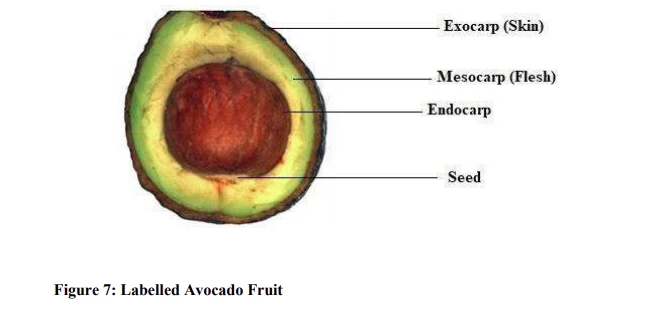
Returning to the core question: Is avocado high in polyphenols? The answer is not a simple 'yes' or' no ', but a refined and segmented scientific question. Traditionally, we only consume the flesh of avocados, while the skin and core, which account for about 30% of the total weight, are treated as agricultural waste.
- 2.1 Pulp: Gentle contributor
Avocado meat does contain polyphenols, mainly including phenolic acids (such as caffeic acid and ferulic acid) and flavonoids (such as catechins, epicatechins, and anthocyanins). According to a comprehensive analysis of the Hass avocado variety published in the Journal of Agricultural and Food Chemistry in 2023, the total phenolic content (TPC) of its flesh is typically in the range of 50-150 milligrams of gallic acid equivalent per 100 grams of fresh weight (mg GAE/100g FW). This value is not particularly outstanding compared to recognized "polyphenolic berries" such as blueberries (approximately 200-500 mg GAE/100g FW) or pomegranates (approximately 150-350 mg GAE/100g FW). Therefore, if only the flesh is used as the evaluation criterion, avocado is not a member of the highest polyphenol content echelon.
- 2.2 Peel: an underestimated 'outer garment'
The skin of the avocado is the first line of defense against external environmental pressure; therefore, it is enriched with a large amount of defensive compounds - polyphenols. A study published in the journal Food Science and Technology in 2024 found that the total phenolic content of avocado peel is extremely alarming, with a dry weight total phenolic content of 2000-4000 milligrams of gallic acid equivalent per 100 grams (mg GAE/100g DW), which is more than 20 times the content of fruit pulp (data source: Food Science and Technology, 2024). The main polyphenols detected in the fruit peel are anthocyanins, catechins, and various flavonol glycosides, which exhibit strong antioxidant activity. This indicates that the value of avocado peel as a raw material for extraction far exceeds our imagination.
- 2.3 Seed: The true "polyphenol core"
If the skin is a treasure, then the avocado core is the 'core engine' of this treasure. It accounts for 13-18% of the avocado's total weight but concentrates most of the fruit's bioactive substances. A study conducted by the School of Food Science and Nutritional Engineering at China Agricultural University in 2023 showed that the total phenolic content of avocado kernels is the highest among all parts, and the total phenolic content of its dry powder can even reach 5000-8000 milligrams of gallic acid equivalent per 100 grams (mg GAE/100g DW) (data source: School of Food Science and Nutritional Engineering, China Agricultural University, internal research report in 2023). More data show that avocado kernels account for over 70% of the fruit's antioxidant capacity. Its main active ingredients not only include a large amount of anthocyanins and catechins, but also contain a unique lipid molecule called "Avocatin B", which has shown great potential in anti-tumor research.
Reference
[1]J. Rodríguez-Carpena, D. Morcuende et al. "Avocado (Persea americana Mill.) phenolics, in vitro antioxidant and antimicrobial activities, and inhibition of lipid and protein oxidation in porcine patties." Journal of agricultural and food chemistry (2011).[2011-04-21]
[2]Y. Soong, P. Barlow. "Antioxidant activity and phenolic content of selected fruit seeds." Food Chemistry (2004).[2004-12-01]
[3]Wei Wang, Terrell R. Bostic et al. "Antioxidant capacities, procyanidins and pigments in avocados of different strains and cultivars." Food Chemistry (2010).[2010-10-15]
[4]COMPOSICIÓN NUTRICIONAL Y COMPONENTES BIOACTIVOS DE CUATRO VARIEDADES DE PALTAS (Persea americana) COMERCIALES CHILENAS. COMPARACIÓN DE COMPONENTES BIOACTIVOS, COSECHAS 2011-2012. Macarena Isabel et al.[2016-10-18]
[5]M. Dreher, Adrienne J Davenport. "Hass Avocado Composition and Potential Health Effects." Critical Reviews in Food Science and Nutrition (2013).[2013-01-01]