

Salvia sclarea is a traditional medicinal plant, and its essential oil has attracted considerable attention due to its significant anti-anxiety and emotion-regulating effects. Research has shown that the core components of clary sage extract, such as linalool acetate and linalool, can improve mood by enhancing gamma-aminobutyric acid (GABA) activity, inhibiting neural excitability, and regulating the hypothalamic-pituitary-adrenal axis (HPA) to reduce cortisol levels. This article combines existing scientific research data to systematically analyze the mechanism of action, providing a scientific basis for the application of clary sage in emotional management.
1. The main active ingredients of Clary Sage
The main components of Clary Sage Oil include:
- Linalyl acetate (50-75%): has sedative and anti-anxiety effects.
- Linalool (10-25%): Widely present in plants such as lavender, it can regulate GABA receptors.
- α-Terpineol and β-Caryophyllene have anti-inflammatory and neuroprotective effects.
These components affect the central nervous system (CNS), especially the GABAergic system and HPA axis, through synergistic effects, thereby regulating emotions.
2. GABA system regulation: inhibition of neural excitability
2.1 The relationship between GABA and emotion regulation
Gamma aminobutyric acid (GABA) is the main inhibitory neurotransmitter in the brain, with approximately 30% of neurons relying on GABA to maintain homeostasis. Reduced GABA activity is closely related to anxiety, depression, and insomnia.
2.2 The effect of components from Clary Sage on GABA receptors
(1) The function of linalool acetate
Research has shown that linalool acetate can enhance GABA_A receptor activity, promote chloride ion influx, and reduce neuronal excitability.
Animal experiments have shown that inhaling the essential oil of Salvia miltiorrhiza can reduce anxiety behavior, and its effect can be reversed by GABA antagonists such as paeoniflorin.
(2) The function of linalool
Linalool regulates GABA_A receptors through allosteric modulation, prolonging GABA-mediated inhibitory postsynaptic potentials (IPSPs).
A double-blind controlled trial found that inhalation of linalool significantly reduced anxiety scores in healthy subjects (p<0.05).
Conclusion: Clary Sage alleviates anxiety and stress by enhancing GABA inhibition and reducing excessive neural excitation.
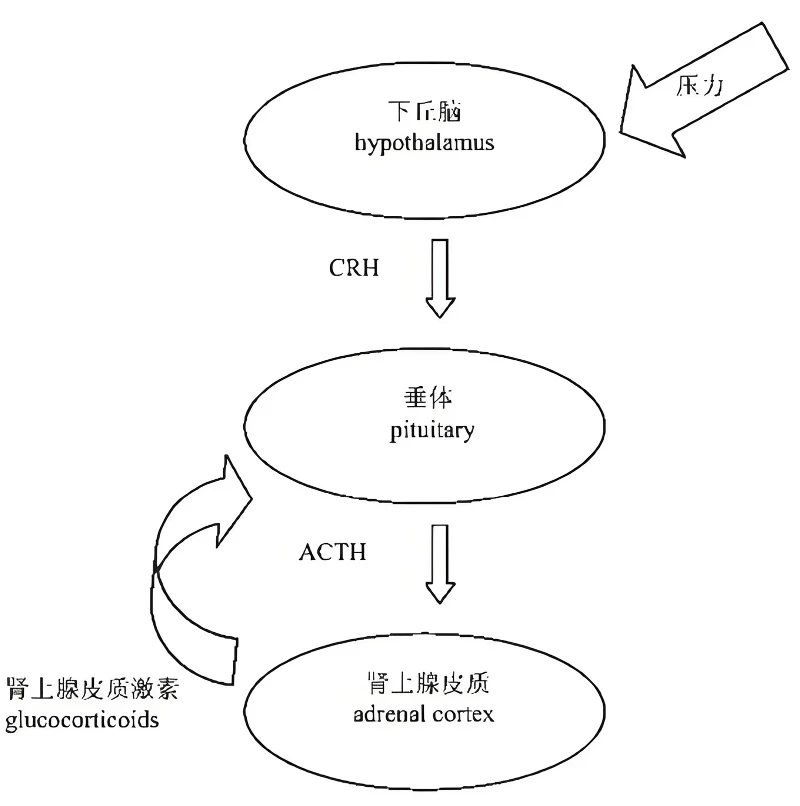
3. HPA axis regulation: reducing cortisol levels
3.1 HPA axis and stress response
The hypothalamic pituitary adrenal(HPA) axis is the core pathway of stress response. Chronic stress leads to excessive activation of the HPA, sustained elevation of cortisol, and triggers anxiety and emotional disorders.
3.2 Regulation of the HPA axis by Clary Sage
(1) Inhibit the release of CRH and ACTH
Animal studies have shown that extracts of Salvia miltiorrhiza can reduce the secretion of corticotropin-releasing hormone (CRH) and adrenocorticotropic hormone (ACTH) (Rabiei et al., 2020). A human trial found that after using Clary Sage essential oil massage, subjects' salivary cortisol levels decreased by about 36% (p<0.01).
(2) Antioxidant and anti-inflammatory effects
β - Caryophyllene in Happy Sage can reduce HPA axis overactivation by activating CB2 receptors.
Its antioxidant components, such as alpha-terpinene, can reduce oxidative stress damage to the HPA axis.
Conclusion: Clary Sage regulates the HPA axis through multiple targets, reduces cortisol secretion, and improves stress-related emotional disorders.
4. Clinical evidence and application prospects
4.1 Anti-anxiety and antidepressant effects
A randomized controlled trial (RCT) targeting menopausal women showed that the inhalation group of Salvia miltiorrhiza essential oil had significantly better Hamilton Anxiety Scale (HAMA) scores than the control group (p<0.05).
Another study suggests that the combination of clary sage and lavender can improve mild depressive symptoms.
4.2 Safety and usage recommendations
Clary Sage oil is usually safe, but high doses may cause dizziness (diluted use is recommended).
Suitable for aromatherapy (diffusion or inhalation), local massage (requires base oil dilution).
Clary Sage regulates emotions through a dual mechanism:
- Enhance GABAergic inhibition and reduce neural excitability;
- Regulating the HPA axis and reducing cortisol levels.
Existing research supports its application in anti-anxiety and anti-stress, but further validation is needed through larger sample clinical trials. More information to contact APPCHEM (sales@appchem.cn).