

1. What Exactly Are Apple Polyphenols?
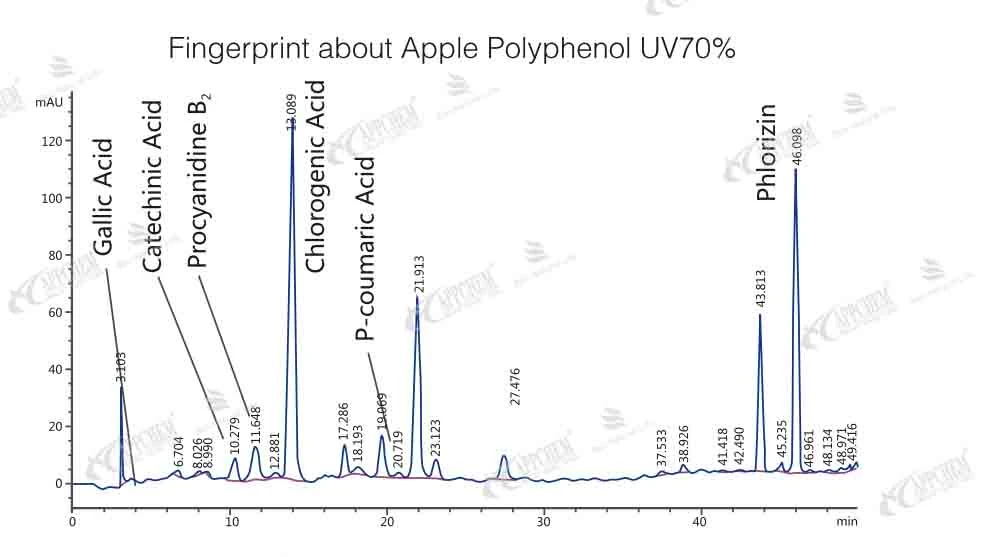
Apple polyphenols are not a single compound but a general term for a class of phytochemicals widely present in apples. Their concentration and composition are influenced by apple variety, maturity, growing conditions, and processing methods. Research indicates that unripe "immature fruits" are particularly rich in polyphenols and serve as the primary source for commercial extraction.[1]
The main members of the apple polyphenol family include:
- Proanthocyanidins: This is the most abundant and biologically active class within apple polyphenols, with procyanidin B2 (dimer B2) being particularly recognized as a key contributor to numerous health benefits.
- Flavanols: These include catechin and epicatechin, which are also hallmark active components found in tea.
- Phenolic acids: Represented by chlorogenic acid.
- Flavonols: such as quercetin and its glycosides.
- Dihydrochalcones: Particularly phloridzin, primarily found in apple peels.
It is precisely this complex and unique composition that endows apple polyphenols with diverse and potent bioactivities.
2. Scientific Evidence: Health Benefits of Apple Polyphenols
In recent years, research on the functional properties of apple polyphenols has flourished, spanning multiple levels from cellular and animal studies to human trials. Below are several scientifically validated core benefits.
2.1 Powerful Antioxidant Capacity
Antioxidation is the most well-known fundamental function of apple polyphenols. It not only directly removes free radicals in the body, mitigating oxidative stress damage to cells, but more importantly, it activates the body's own antioxidant defense system from the source. Multiple studies have confirmed that apple polyphenols can activate the Nrf2 (nuclear factor erythroid 2-related factor 2) signaling pathway.[2]
2.2 Significant Anti-inflammatory Effects
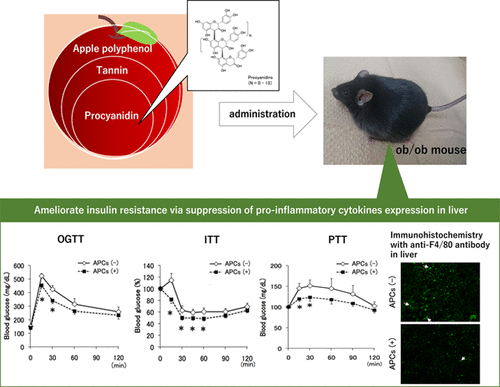
Apple polyphenols excel in inhibiting inflammatory responses. Research has found that apple polyphenols can effectively suppress the production and release of various pro-inflammatory cytokines, such as tumor necrosis factor-α (TNF-α), interleukin-6 (IL-6), and interleukin-1β (IL-1β).[3]
2.3 The Rising Star in Weight and Blood Sugar Management
In the context of increasingly severe global metabolic health issues, the multifaceted mechanisms of apple polyphenols in weight control and blood sugar regulation have made them a focal point in the development of functional foods. Apple polyphenols effectively inhibit the activity of α-amylase and α-glucosidase, two enzymes crucial for breaking down carbohydrates into glucose. By suppressing these enzymes, apple polyphenols can delay the absorption rate of postprandial carbohydrates, thereby moderating blood sugar spikes and offering positive implications for blood sugar management in individuals with prediabetes and diabetic patients.
Overall, apple polyphenols have evolved from an extract of a traditional fruit into a highly valuable commercial star ingredient, thanks to their well-defined chemical composition, solid scientific foundation (particularly in antioxidant, anti-inflammatory, and metabolic regulation effects), and favorable safety profile.
For enterprises in the plant extract industry, apple polyphenols represent a significant innovation opportunity. For more details about apple polyphenols, connect with Serrisha from APPCHEM. (Email: cwj@appchem.cn; +86-138-0919-0407)
Reference
[1] Self-determined Generally Recognized As Safe (gras) Assessment of Appleactiv Dapp ™/ Leahy Dapp ™. Leahy Orchards et al.[2014-11-04]
[2] Mass spectrometric strategies to identify bioactive components from natural extracts with anti-inflammatory activities. GIULIO FERRARIO.
[3] M. Jung, S. Triebel et al. "Influence of apple polyphenols on inflammatory gene expression." Molecular nutrition & food research (2009).[2009-10-01]
[4] Study on the hypoglycemic and antioxidant activities of polysaccharides from Polygonatum sibiricum in vitro Wang Rui [2018-02-23]