

Fruits play a contradictory role for our teeth - they are both potential guardians and potential invisible invaders. As a member of the apple extract industry, we need to delve into the molecular level to explore which specific components in fruits are at work, and what their mechanisms of action are.
1. The 'double-edged sword' effect of fruits and dental health
Simply categorizing the impact of fruits on teeth as "good" or "bad" is one-sided. In fact, when we chew a piece of apple, a complex biochemical game is unfolding in our mouths.
- The positive side: the natural oral cleaner.'
Physical cleaning and saliva secretion:
①Chewing fruits like apples that are rich in fiber and have a crisp texture is itself a mechanical cleaning process. When the pulp fibers rub against the surface of teeth, they can help remove some loosely attached food residues and dental plaque.
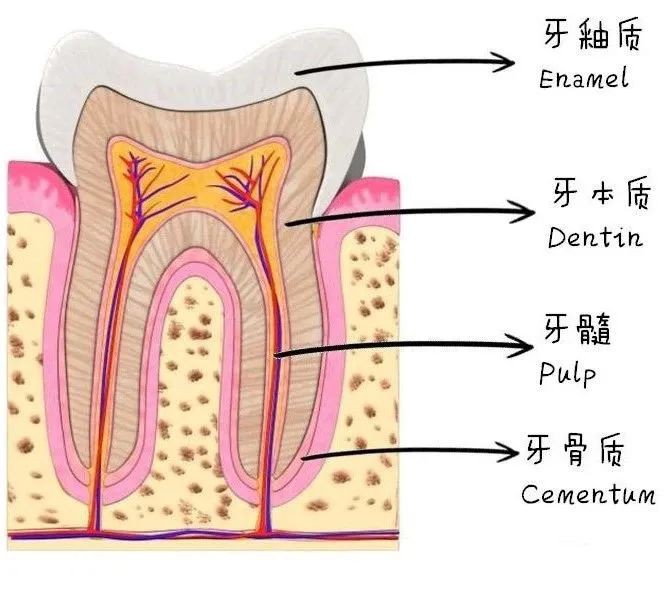
②More importantly, chewing can effectively stimulate salivary glands and secrete a large amount of saliva. Saliva is a natural "regulator" of the oral environment. It not only washes away food residues but also contains a buffering system that can neutralize the acids produced by plaque. The mineral ions, such as calcium and phosphorus, in saliva are more conducive to the early demineralization and remineralization of enamel, which is crucial for maintaining tooth hardness.
- Negative Side: Potential Threats of Sugar and Acid
①Sugar - the "energy rod" of cariogenic bacteria:
Fructose, sucrose, and other naturally occurring sugars in fruits are the "delicacies" of microorganisms such as Streptococcus mutans, the main cariogenic bacteria in the oral cavity. After metabolizing sugar, these bacteria produce acidic substances, primarily lactic acid, which results in a rapid decrease in the pH value of the oral environment.
②Acid corrosion - the "corrosive agent" of enamel: When the pH value of the oral cavity is below the critical value of 5.5, the hardest protective layer on the surface of teeth - enamel - will begin to demineralize, that is, calcium and phosphorus ions will be lost. Citrus fruits, strawberries, and some varieties of apples themselves contain high levels of organic acids such as citric acid and malic acid, which can directly attack tooth enamel and cause "Dental Erosion."
2. The "Surprise" Effects of Polyphenols and Flavonoids
Modern scientific research has found that the true core benefits of fruits for oral health lie in their abundance of various bioactive compounds, particularly polyphenols and flavonoids. These substances are precisely the focus of attention in the plant extract industry.
- Core mechanism 1: Inhibit and disintegrate the biofilm of cariogenic bacteria
The occurrence of dental caries is not caused by a single bacterium, but rather by the "biofilm" formed by the aggregation of various microorganisms, such as Streptococcus mutans, commonly known as dental plaque. This biofilm structure is stubborn, able to resist external physical and chemical impacts, and continuously produces acid. Polyphenolic substances can effectively inhibit the growth, acid production, and adhesion of Streptococcus mutans on tooth surfaces. Their targets are very precise, for example:
①Inhibition of key enzyme activity: interferes with key enzymes involved in bacterial sugar metabolism (such as glycosyltransferases), reducing acid production at the source.
②Blocking signaling pathways: disrupting the quorum-sensing system between bacteria, preventing them from effectively aggregating to form a strong biofilm.
③Change the surface characteristics of bacteria: reduce their hydrophobicity, making it difficult for them to adhere to the enamel surface.

In recent years, the market size of China's plant extract industry has continued to grow steadily. With the continuous expansion of downstream application areas, especially in the fields of health, functional foods, and personal care, the market prospects are very optimistic.
Oral care products are the perfect application scenario under this trend.
- Functional toothpaste: added with apple anthocyanin extract, specifically designed to inhibit plaque adhesion.
- Herbal mouthwash: Rich in polyphenols extracted from apples, it can effectively neutralize oral odor, inhibit harmful bacteria, and has a mild and non-irritating taste.
Dental lozenges or chewing gum: infused with flavonoids such as baicalein, providing continuous protection for dental enamel while enjoying its deliciousness.

For more details about apple polyphenols, connect with Serrisha from APPCHEM. (Email: cwj@appchem.cn; +86-138-0919-0407)
Reference
[1]R. Shellis, J. Featherstone et al. "Understanding the chemistry of dental erosion." Monographs in oral science (2014). [2014]
[2]H. J. Florestano. "Studies on oral health as reflected in the saliva, with special reference to the local and systemic use of citrus fruits, oral aciduric microorganisms, diastatic activity and pH." (1940).[1940]
[3]S. Duarte, S. Grégoire et al. "Inhibitory effects of cranberry polyphenols on formation and acidogenicity of Streptococcus mutans biofilms.." FEMS Microbiology Letters.[2006-04-01]
[4]Lucille Rudin, M. Bornstein et al. "Inhibition of biofilm formation and virulence factors of cariogenic oral pathogen Streptococcus mutans by natural flavonoid phloretin." Journal of Oral Microbiology. [2023-07-03]