

In the application of plant extracts for blood glucose management, Coptis extract and bitter melon extract have garnered significant attention for their potential hypoglycaemic effects. Although both extracts are widely employed to regulate blood sugar levels and possess a long history of use across multiple cultures, their active constituents, mechanisms of action, and clinical evidence exhibit marked differences. For professional procurement and research and development teams, gaining a thorough understanding of the functional characteristics of these two plant extracts facilitates more scientifically informed and targeted decisions during product development.
How Do Their Active Compounds and Mechanisms Differ?
Coptis chinensis extract is derived from the traditional Chinese medicinal herb Coptis chinensis, with berberine as its core active component. Berberine is a plant alkaloid possessing broad pharmacological effects; research indicates it aids in lowering blood glucose levels through mechanisms including inhibition of hepatic glucose synthesis, improvement of insulin sensitivity, and regulation of fat metabolism. According to a 2021 study in the Journal of Clinical Endocrinology & Metabolism, berberine from Coptis chinensis exerts its hypoglycaemic effects by modulating the AMPK pathway, enhancing fatty acid metabolism, and reducing hepatic gluconeogenesis, demonstrating particularly pronounced efficacy in individuals with type 2 diabetes.

Bitter melon extract is derived from Momordica charantia, whose primary active constituents include momordicosides, bitter melon protein, and flavonoids. Research indicates that bitter melon mimics insulin action through components like momordicosides and bitter melon protein, promoting cellular glucose uptake and enhancing insulin secretion. According to a 2020 study in the Journal of Ethnopharmacology, bitter melon extract demonstrates significant effects in promoting glucose uptake, enhancing insulin activity, and lowering blood glucose levels, particularly suitable for managing hypoglycaemia.
Mechanistically, Coptis chinensis achieves its hypoglycaemic effects primarily through AMPK regulation and control of hepatic glucose metabolism, whereas bitter melon extract regulates blood sugar levels more through insulin mimicry and cellular glucose uptake. Their hypoglycaemic mechanisms are complementary yet distinct: Coptis chinensis focuses on modulating hepatic glucose metabolism, while bitter melon leans towards enhancing insulin action.
How Do Their Clinical Benefits Compare for Blood Sugar Management?
Coptis chinensis extract has garnered extensive research support in clinical applications, particularly concerning the treatment and glycaemic control of type 2 diabetes. A 2020 double-blind trial published in Diabetes Care demonstrated that berberine, a component of Coptis chinensis extract, significantly reduced fasting blood glucose levels and improved insulin sensitivity in type 2 diabetic patients. Its mechanism of action is closely associated with the activation of the AMP-activated protein kinase (AMPK) pathway. Berberine's regulatory effect on glucose metabolism disorders positions it as a promising natural hypoglycaemic agent.

In contrast, clinical research on bitter melon extract has predominantly focused on its insulin-mimetic properties and adjunctive treatment of hypoglycaemia. A 2021 study in Phytotherapy Research demonstrated that bitter melon extract effectively increases glucose transporter (GLUT4) expression, enhances insulin sensitivity, and contributes to reduced postprandial blood glucose levels. Bitter melon extract has also shown favourable clinical outcomes in managing prediabetes and diabetic complications.
Overall, Coptis chinensis extract is better suited for regulating hyperglycaemia and improving insulin resistance, whereas bitter melon extract tends to manage blood glucose levels by enhancing insulin function and increasing cellular glucose uptake. The two exhibit complementary effects in their respective pathways for glucose reduction.
What Are the Bioavailability and Formulation Considerations?
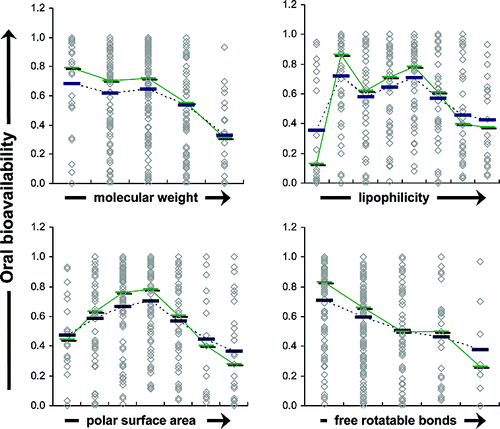
In terms of formulation and bioavailability, berberine from Coptis chinensis exhibits high biological activity but relatively low bioavailability due to its poor water solubility and limited gastrointestinal absorption. Consequently, researchers have employed techniques including nanotechnology and phospholipid complexes to enhance berberine's bioavailability. According to a 2022 study in the Journal of Pharmaceutical Sciences, these techniques significantly improve berberine's absorption rate and bioavailability, thereby enhancing its pharmacological effects.
Bitter melon extract exhibits high bioavailability, with its active components-such as charantin and momordicin-rapidly exerting effects within the body. Bitter melon extract is typically processed into powder, liquid extract, or capsule forms, with liquid extracts demonstrating superior bioavailability. In product development, bitter melon extract can be combined with other anti-glycaemic ingredients (such as green tea extract or white sedge root) to enhance overall hypoglycaemic efficacy.
What Do Safety Profiles and Regulatory Status Indicate?
From a safety perspective, Coptis chinensis extract generally exhibits a favourable safety profile in most circumstances. Research indicates that Coptis chinensis presents relatively few side effects, though high-dose administration may induce mild gastrointestinal discomfort such as nausea or diarrhoea. A 2021 study in the Journal of Natural Products demonstrated that Coptis chinensis extract is safe within recommended dosage ranges, though regular monitoring of liver function is advisable during prolonged use.
Bitter melon extract is generally well-tolerated, though a minority may experience gastric discomfort or hypoglycaemia, particularly when combined with other hypoglycaemic medications. According to a 2020 study in Food and Chemical Toxicology, bitter melon extract exhibits relatively low side effects; however, further research is required to establish its safety for pregnant and lactating women.
Consequently, careful attention must be paid to dosage and suitability for specific populations when incorporating bitter melon extract into formulations.
Conclusion: How Should Buyers Position Coptis and Bitter Melon Extracts for Blood Sugar Management?
In summary, both Coptis chinensis extract and bitter melon extract possess distinct hypoglycaemic mechanisms and are suitable for different blood glucose management requirements. Coptis chinensis extract is suitable for products aimed at improving insulin resistance, controlling hyperglycaemia, and addressing diabetes-related complications. Bitter melon extract, conversely, is better suited for enhancing insulin sensitivity and promoting glucose uptake, making it appropriate for products targeting prediabetes and hypoglycaemia management. The selection between the two can be guided by the target consumer group and the differentiated functional requirements of the product. They may even be used complementarily within the same formulation to enhance overall efficacy.