

Adaptogenic plants play a significant role in modern dietary supplements and functional foods, particularly in relation to stress resistance and the enhancement of physical and cognitive performance. Ginseng (Panax ginseng) and Eleuthero (Eleutherococcus senticosus) are two classic adaptogens, representing traditional Asian medicinal plants and wild stress-resistant plants from Northeast Asia and Siberia, respectively. Although both are widely used to enhance the body's stress resistance and improve immune tolerance, there are significant differences in their active constituents, mechanisms of action, and clinical applications. For product development and raw material procurement teams, understanding these differences facilitates scientific formulation design and market positioning.
How Do Their Active Compounds and Adaptogenic Mechanisms Differ?
The primary active constituents of ginseng are ginsenosides, which include various compounds such as Rb1, Rg1, and Re. Research indicates that ginsenosides can improve the body's tolerance to psychological and physiological stress by modulating the hypothalamic-pituitary-adrenal (HPA) axis, enhancing antioxidant capacity, and regulating neurotransmitter levels.
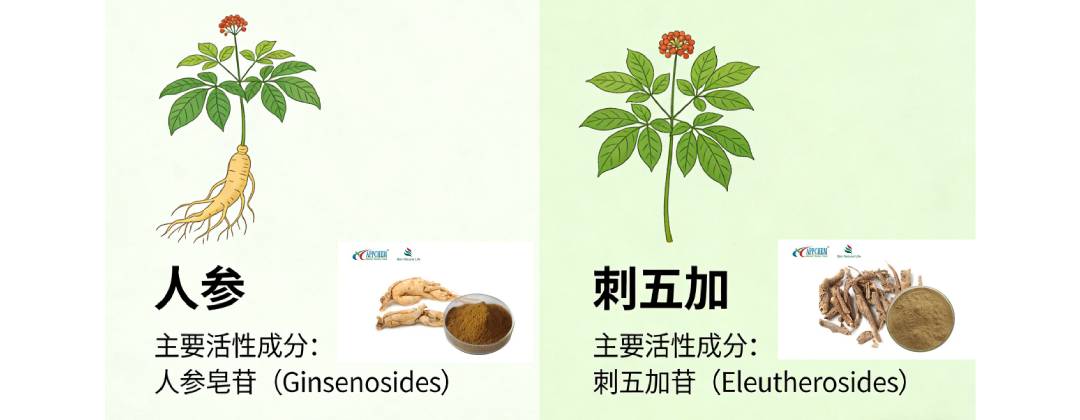
The primary active components of Siberian ginseng are eleutherosides, such as eleutherosides B and E. Its mechanism of action primarily involves enhancing the body's stress resistance by regulating the immune system, improving energy metabolism, and antioxidant capacity. Some studies indicate that Siberian ginseng can improve exercise endurance and enhance cardiopulmonary function, whilst providing mild stimulation to the nervous system and boosting energy levels.
In terms of mechanism, ginseng tends to regulate the neuroendocrine system and psychological stress responses, whereas Siberian ginseng tends to enhance physical strength, combat fatigue, and improve immune tolerance.
What Does Clinical Evidence Suggest About Stress and Fatigue?
Clinical studies have shown that ginseng is effective in alleviating chronic stress and cognitive fatigue. A double-blind, randomised controlled trial (n=90) demonstrated that daily oral administration of standardised ginseng extract for eight weeks significantly reduced serum cortisol levels and improved cognitive attention scores. Clinical research on Siberian ginseng has focused more on exercise endurance and immune function. In a randomised controlled trial, athletes who supplemented with Siberian ginseng extract during high-intensity training showed a significant reduction in exercise-induced fatigue markers (decreased blood lactate levels), whilst also exhibiting enhanced NK cell activity.
Consequently, the evidence for ginseng is more robust in terms of psychological and neurological stress resistance, whereas Siberian ginseng is more prominent in relation to physical and immune resilience.
How Do Physiological Benefits Differ in Adaptogenic Applications?
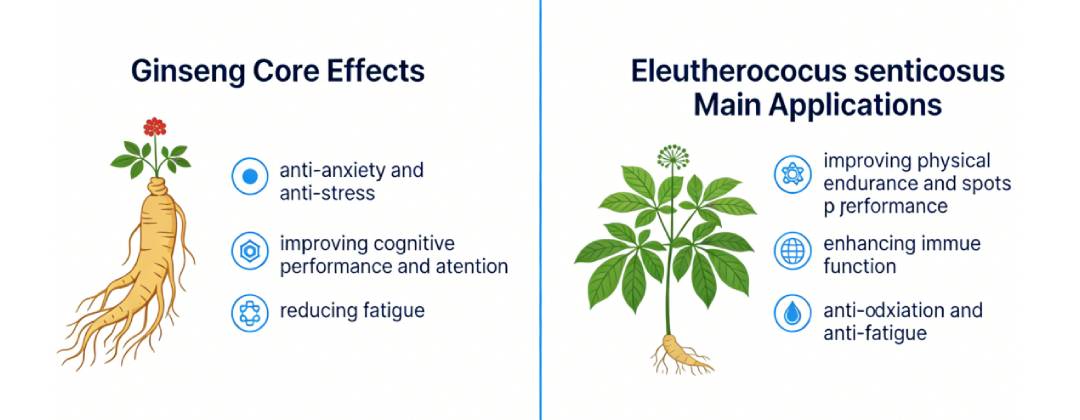
In the context of ginseng applications, its key benefits include:
- Anxiety and stress relief
- Enhanced cognitive performance and attention
- Reduced feelings of fatigue
The primary applications of Siberian ginseng are:
- Improved physical stamina and athletic performance
- Boosted immune function
- Antioxidant and anti-fatigue effects
Consequently, in functional food and dietary supplement formulations, ginseng is commonly used in products designed for emotional management and cognitive enhancement, whilst Siberian ginseng is frequently incorporated into products aimed at combating physical fatigue and supporting sports nutrition.
Conclusion: How Should Buyers Position Ginseng and Eleuthero in Adaptogen Formulations?
In summary, ginseng and Siberian ginseng each have their own specific areas of focus:
Ginseng extract: A key ingredient in products designed to support psychological resilience, cognitive function, and emotional well-being.
Siberian ginseng extract: A key ingredient in products designed to support physical stamina, immune resilience, and fatigue resistance.
Procurement and R&D teams may select either a single ingredient or a combination of ingredients based on the product's positioning, in order to achieve a dual psychophysical adaptogenic effect whilst ensuring traceability, standardisation, and quality control.