

Amber is originally odorless, but as a fragrance fixative, Ambroxide is claimed to impart an amber fragrance. Is this statement appropriate?
When selecting perfume, people often see the fixative with amber/ambre in its name. The English word amber is defined in the Longman Dictionary as a hard, yellowish or brown substance used to make jewelry, which is essentially a tasteless mineral. So, what do you mean by "amber note" and "amber" that often appear in the perfume and essence industry? Is the amber fragrance derived from amber?
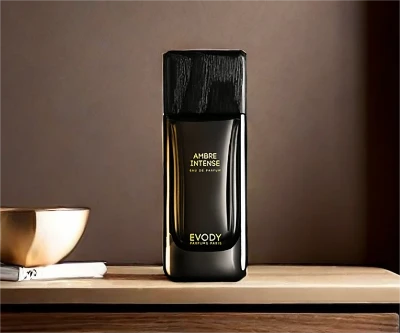
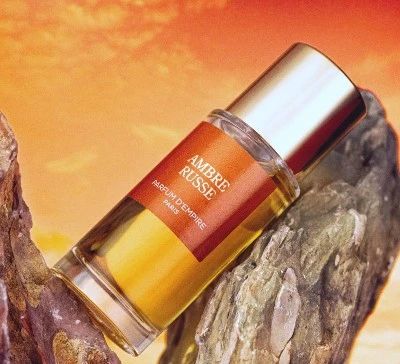
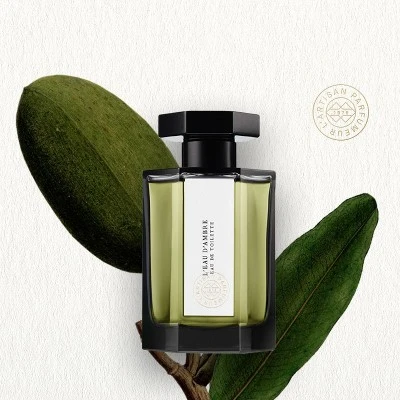
Firstly, to address the confusion above, we need to clarify several concepts. In the perfume industry, fragrance base and fragrance type are terms of different dimensions. The fragrance base corresponds to the unit of the fragrance mixing process, while the fragrance type corresponds to the structural classification of perfume.
1. Fragrance base is a compound aroma unit pre-prepared by a variety of spices (natural/synthetic), which is the "basic module" for perfume makers to build, and is a specific physical mixture.
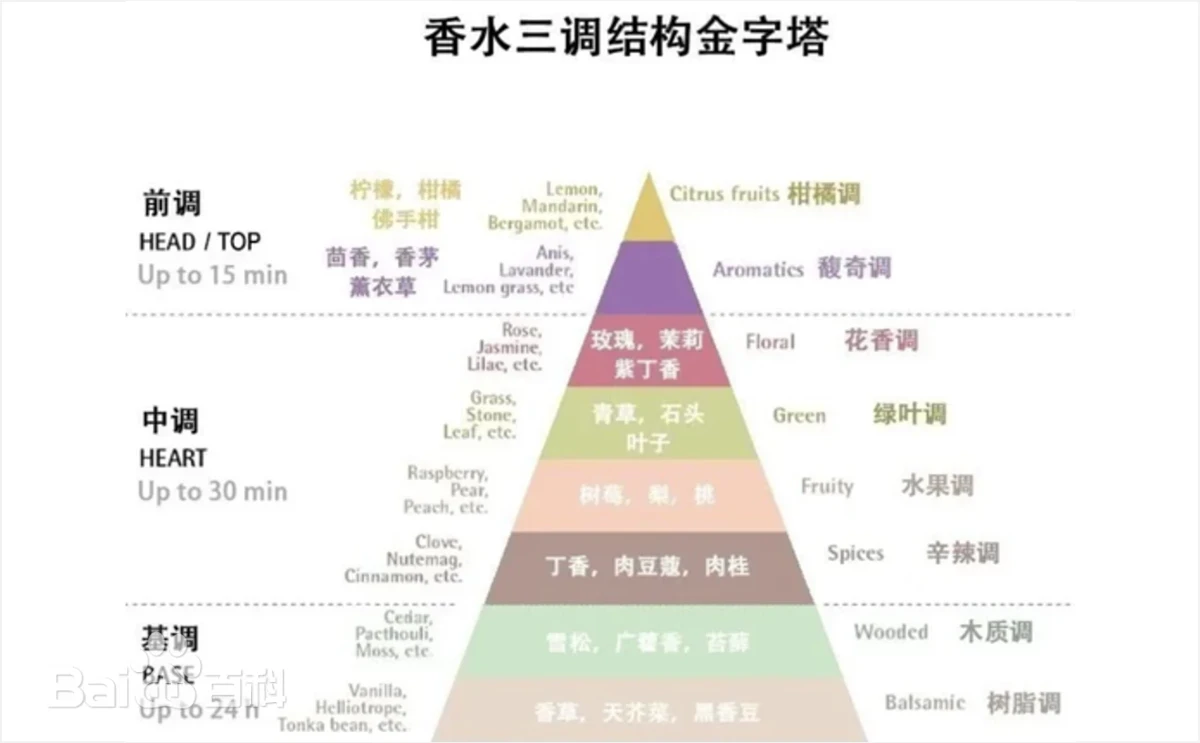
2. Fragrance type is a systematic classification of perfume odor style, an abstract fragrance classification label, and a fragrance concept. Since ancient times, many predecessors have proposed different methods for classifying fragrances. It is quite constructive that in April 1954, British perfumer Poucher published his classification results based on the volatility (time) of spice aromas in the Journal of Cosmetic Chemistry. He evaluated a total of 330 natural and synthetic fragrances and other aromatic substances, categorizing them into three categories: top note, body note, and basic note based on the duration of their volatilization and retention on fragrance paper. Poucher assigned a coefficient of 1 to spices that cannot be smelled in less than a day, and so on (i.e., a coefficient of "2" for less than the next day). He classified these 330 spices as 1-100. He classified 1-14 as the head fragrance, 15-60 as the body fragrance, and 61-100 as the base fragrance. In addition, there are also classification methods based on overall style, which can be divided into four categories: floral type, wooded type, aromatic type, etc..
Amber, as a fragrance base, should start with a French company called De Laire. DL Company has a long history. As early as 1875, synthetic vanillin was introduced. DL seized the opportunity and decisively entered the market, immediately starting the production of vanillin and making a fortune. Facts have proven that whoever catches vanillin is catching the masterpiece of early perfume. The earliest known masterpiece of perfume, such as Jicky, was created by Vanillin, the early masterpiece of Guerlain. In addition to providing vanillin to companies like Guerlain, DL is not satisfied and has also created many fragrance bases, one of which is called Ambre 83, which is made by blending vanillin, ladanum, and other ingredients. The base may have higher profits, but the fragrance type of this base has little to do with ambre. Why is it called ambre? DL claimed that it is the same as the AMBERGRIS in the original perfume in terms of use. But the amber base itself does not contain the addition and use of amber and ambergris. De Laire was acquired by the French Robert Group in 2000 and later merged into the Symrise Group. Its original name no longer exists as an independent entity.
Amber is a fossilized resin produced by plants, occasionally enveloping insects. It is tasteless, but the volatile components of amber can also be stimulated and concentrated through some means. According to the GC-MS analysis of amber volatile oil components, the main aroma components of amber volatile oil are
- Spathulenol(36.74%): woody aroma components;
- α - copaene(23.84%), Oxidized Caryophyllene(5.25%): resin and pungent aroma;
- Aristolene epoxides(5.02%) and β - elemene (3.63%): They contribute to the aroma of medicinal herbs and soil.
Moreover, amber is not a fragrance material; its odor is a terpene odor (like rosin). The aroma components of amber are very different from the commonly known amber scent (warm and sweet resin aroma). In the 19th century, perfumers mixed resins such as ladanum, vanilla, and frankincense, and named it "Amber Type" because the liquid appeared amber in color and simulated the warm sensation of ambergris. This is the first aroma invented in the late 19th century using vanillin. The simple combination of vanillin (a synthetic product) and laudanum (a natural product) has become the olfactory standard of many perfumes. Now, under the more scientific classification of "Michael Edwards perfume Wheel", the Amber type belongs to the "Oriental type - Soft", which is a subset of the Oriental type, but can be blended with the woody type across borders. Therefore, the description of "amber fragrance" does have inherent inaccuracy, but there is a description of amber type with an amber fragrance base.
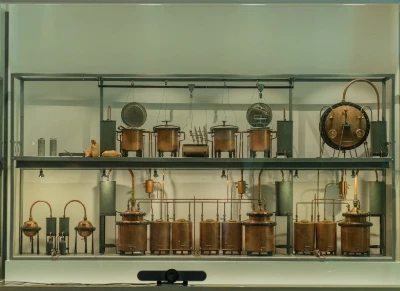
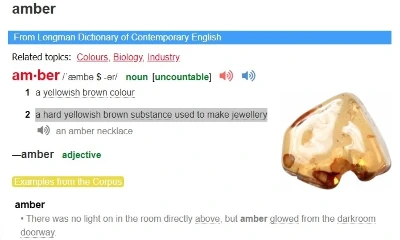
Amber fragrance comes from the modern translation of English amber or French ambre. According to the dictionary, amber means a yellowish brown colour or a hard, yellowish brown substance used to make jewellery. If you look up the etymology of amber, you often see that amber/ambre originally refers to ambergris. For example, the word originally came from the medieval Arabic word عنبر, specifically referring to the secretion of sperm whales called "ambergris". Later, the French expanded the meaning of ambre to include the mineral amber. Later, to distinguish between ambre and ambre, it was changed to "ambre gris" and "ambre jaune". The potential connection between the two may be that both amber and ambre can be found on beaches. Over time, when Europeans noticed something was a bit chaotic, they would distinguish between yellow amber and grey amber, or amber gris and amber.
The difference in the smell of amber at room temperature and the burning state, and the wrong correlation between grey amber and ambergris, make amber fragrance gradually become a distorted term left over by history. The "Amber" in the ingredient list of perfume is a composite fragrance that the perfumers use laudane, vanilla, peruvian balm, and other resins to simulate the warm, salty, and sweet ambergris. Tracing the etymology, it can be found that 'amber fragrance' has never truly described the scent of mineral amber. In essence, it is the collective metaphor of the perfume industry for ambergris substitutes (such as ambroxide) - the wooden-ocean rhyme provided by this synthetic molecule coincides with the romantic imagination of human beings on resin.
APPCHEM provides a stable and reliable supply chain for global customers. If you have any related needs or want to know more information about ambroxide, please feel free to contact us. (Email: sales@appchem.cn)