

As a star ingredient in the plant extract industry, apple polyphenols have shown great market potential in functional foods, health products, and cosmetics due to their powerful antioxidant, anti-inflammatory, and other biological activities. To answer the question of 'which type of apple has the highest polyphenol content', we first need to clarify that the answer is not a simple variety name. The content of apple polyphenols is influenced by the variety, maturity, planting environment, storage conditions, and even different parts of the fruit (such as skin and flesh).
1. Significant Differences Between Varieties Of Apple
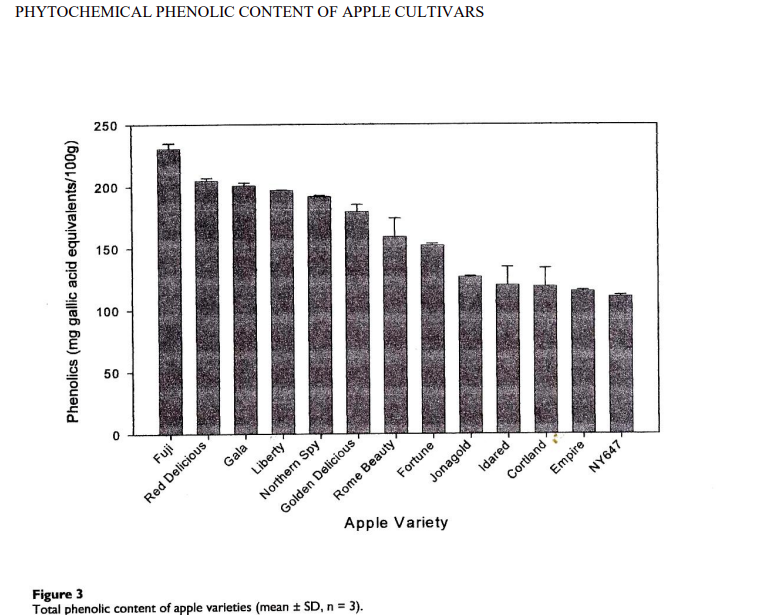
Previous research has shown that some ancient apple varieties with a sour taste or darker color usually have higher polyphenol content than modern, cultivated, commercial varieties that are mainly sweet. For example, studies have shown that the total polyphenol content of the 'Ruggine' variety can reach 170 mg GAE/100g (fresh weight), while the 'Priame' variety has a content of 167.22 mg GAE/100g (fresh weight). Another study showed that the polyphenol content of 'Jonathan' apples is approximately 134 mg GAE/100g (fresh weight). In contrast, the popular 'Fuji' apple has a polyphenol content of 101.7 mg GAE/100g (fresh weight) according to a study.
2. Non-negligible Influencing Factors
2.1 Peel vs. pulp: Apple polyphenols are mainly concentrated in the peel, and their content can reach several times that of the pulp. Therefore, for the plant extraction industry, prioritizing the use of apple peels as raw materials is a key strategy to improve polyphenol extraction rates, provided that costs and processes permit.
2.2 Maturity: Immature apples (young fruits) usually contain higher concentrations of polyphenols, especially anthocyanins, than mature fruits. This is also why many high-end apple polyphenol extracts choose immature young fruits as raw materials.
2.3 Light and environmental stress: Adequate light promotes the synthesis of phenolic compounds such as anthocyanins in apple peels. Similarly, when plants are subjected to environmental stresses such as pests, diseases, or mechanical damage, they produce more polyphenols as a defense mechanism.
Therefore, for plant extract companies, searching for the "apple with the highest polyphenol content" should not be limited to variety screening alone, but should establish a comprehensive evaluation system that covers variety, harvesting period, raw material parts, and planting management.
3. Cutting-edge Trends In Apple Polyphenol And Application
For the plant extract industry, the differences in raw materials in the front-end can be compensated for and optimized through advanced technology in the back-end. In recent years, significant progress has been made in the extraction and purification technology of apple polyphenols and their application in functional foods, especially in terms of efficiency, environmental protection, and high-value-added utilization.
- Green extraction technology: The Supercritical CO2 fluid extraction method uses supercritical carbon dioxide as the extraction agent, which has the advantages of non-toxicity, no residue, mild operating conditions, and effective protection of the activity of thermosensitive polyphenolic substances. It is considered a highly promising green technology.[1]
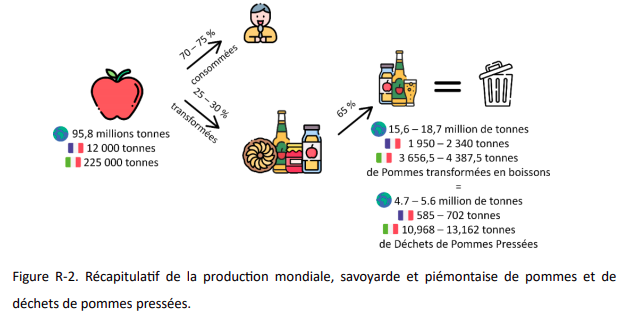
- High value utilization of by-products: The large amount of apple pomace remaining after juicing is an important source of apple polyphenols. Several recent research reviews published in journals such as Food Chem. X has focused on the technology of recovering polyphenols from apple by-products. This not only solves environmental problems but also greatly enhances the economic benefits of the apple processing industry, making it a hot research and development direction in the current industry.
3.1 Innovative applications in functional foods
The strong biological activity of apple polyphenols makes them an ideal ingredient for the development of functional foods. Research and market practice in the past three years have shown that its applications are becoming increasingly diversified and precise.
- Natural antioxidants and preservatives: Adding apple polyphenols in meat processing can effectively inhibit fat oxidation, extend shelf life, and maintain product color and flavor.
- Functional dairy product companion: Adding apple polyphenols (especially those encapsulated using microcapsule technology) to dairy products such as yogurt not only provides additional health benefits (such as antioxidants) but also improves the texture and stability of the product.[4,5]
- Weight management and blood sugar health: research shows that apple polyphenols, especially phlorizin, have a positive effect on regulating blood sugar and inhibiting fat absorption, making them potential ingredients for developing functional drinks and solid drinks for people with weight management and pre-diabetes.
- Oral health products: Apple polyphenols can inhibit the growth and acid production of cariogenic bacteria in the oral cavity, and can be used to develop anti-caries products such as chewing gum and mouthwash.
For more details about apple polyphenols, connect with Serrisha from APPCHEM. (Email: cwj@appchem.cn; +86-138-0919-0407)
Reference
[1]Research progress on the extraction and purification technology of apple polyphenols. XU Xian-meng et al. [2021-02]
[2]5º Encontro em Biotecnologia Medicinal / 2nd Iberian Congress on Medicinal Biotechnology. Escola Superior de Saúde, P.PORTO. [2022-10-21]
[3]Ivana Buljeta, M. Nosić et al. "Apple Fibers as Carriers of Blackberry Juice Polyphenols: Development of Natural Functional Food Additives." Molecules (2022). [2022-05-01]
[4]Development of Enabling Technologies for Residual Biomass Valorization in a Context of Circular Economy. Lauriane BRUNA. [2024-11]
[5]M. Maisto, Elisabetta Schiano et al. "Application of a Rapid and Simple Technological Process to Increase Levels and Bioaccessibility of Free Phenolic Compounds in Annurca Apple Nutraceutical Product." Foods (2022).[2022-05-01]