

Polyphenols, as a star ingredient, are widely used in functional foods, dietary supplements, and cosmetics due to their powerful biological activities, almost becoming synonymous with "natural, healthy, and efficient". However, as we immerse ourselves in the enormous commercial value and health narrative brought by polyphenols, we must maintain a clear mind and delve deeper into their potential drawbacks and application challenges.
1. The insurmountable 'bioavailability' gap
Bioavailability refers to the degree and speed at which active ingredients are absorbed into the human circulatory system after oral administration, and is a key indicator for evaluating whether they can truly exert physiological effects. Unfortunately, low bioavailability is a core challenge faced by the vast majority of natural polyphenols.[1,3]
Numerous studies have shown that the absorption rate of most dietary polyphenols in the human body is extremely low, typically less than 10%. The reasons are complex and diverse:
- Complex chemical structure: Many polyphenols exist in the form of glycosides, esters, or polymers, with high molecular weight and strong hydrophilicity, making it difficult to directly penetrate the lipid bilayer of intestinal epithelial cells.[2]
- Widespread in vivo metabolism: Polyphenols entering the human body rapidly undergo complex metabolic processes, including degradation by the gut microbiota and second-stage metabolism in the liver (such as methylation, sulfation, and glucuronidation), resulting in metabolites with much lower biological activity than the original compound.[4]
- Interference of food matrix: Polyphenols often bind with large molecules such as proteins and dietary fiber in the food matrix, which further hinders their release and absorption in the gastrointestinal tract.[2]
2. The significant issue of 'stability' that cannot be underestimated
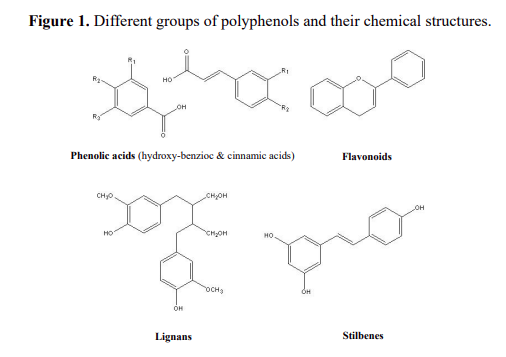
The chemical nature of polyphenols determines their inherent instability. The multiple phenolic hydroxyl groups contained in its molecular structure are not only the basis for its antioxidant activity, but also the "weak point" that makes it highly susceptible to oxidation, degradation, or polymerization under light, heat, oxygen, and specific pH environments.[6]
The challenges posed by this instability are particularly prominent in the production, processing, and storage of plant extracts.
- Oxidative browning: Polyphenols are easily oxidized under polyphenol oxidase (PPO) or non-enzymatic conditions, leading to darkening of product color and the production of odors, seriously affecting the sensory quality and commercial value of the product. This is particularly common in polyphenol-rich products such as fruit and vegetable juices and plant-based beverages.
- Reactive degradation: Temperature and pH are key factors affecting the stability of polyphenols. A study suggests that as the temperature increases from 60 ℃ to 100 ℃, the residual rate of a certain polyphenol extract significantly decreases. Under strong alkaline conditions (pH=11), the residual rate of polyphenols drops to below 20% in a short period of time. This means that in processing steps such as heat treatment and alkaline formulation, the active ingredients of polyphenols will be greatly lost.
- Formula compatibility: Polyphenols are prone to chelation reactions with metal ions (such as iron and copper) in the formula, which may not only cause color changes but also affect the biological activity of polyphenols.

These stability issues require companies to invest in higher technology and costs in extraction processes, formulation design, packaging material selection, and storage condition control to maximize the retention of effective ingredients and product quality of polyphenols.
3. A thrilling leap from 'antioxidant' to 'prooxidant'
For a long time, polyphenols have been known as scavengers of free radicals. However, the scientific community has long discovered that the effects of antioxidants are not linear, but rather exhibit a biphasic effect of "dose dependence" and "environment dependence". Under specific conditions, they may transition from antioxidant to prooxidant, producing harmful effects that are contrary to expectations.
Two large-scale clinical trials conducted in the 1990s on smokers (ATBC study and CARET study) unexpectedly found that supplementing with additional beta carotene supplements (a type of carotenoid) not only failed to prevent lung cancer, but also significantly increased the incidence and mortality rates of lung cancer.[5] Research suggests that in high oxygen partial pressure environments (such as smokers' lungs) and at high doses, beta carotene may exhibit pro-oxidative effects, exacerbating oxidative damage.
In summary, polyphenols are a treasure trove that has yet to be fully developed, but the road to the treasure trove is also full of thorns. Only by dispelling the fog of "natural=absolutely safe" and examining its inherent shortcomings and challenges with awe can the plant extract industry steadily move forward on a scientific track and truly contribute lasting and outstanding value to the cause of human health.
For more details about Apple Polyphenol, connect with Serrisha from APPCHEM. (Email: cwj@appchem.cn; +86-138-0919-0407)
Reference
[1]C. Manach, A., Scalbert et al. "Polyphenols: food sources and bioavailability." The American journal of clinical nutrition (2004). [2004-05-01]
[2]A. Scalbert, G. Williamson. "Dietary intake and bioavailability of polyphenols." The Journal of Nutrition (2000). [2000-08-01]
[3]Resources and Biological Activities of Natural Polyphenols. An-Na Li et al. [2014-12-22]
[4]Natural Products and Neuroprotection. Cristina Angeloni et al. [2020]
[5]O. Heinonen, D. Albanes. "The effect of vitamin E and beta carotene on the incidence of lung cancer and other cancers in male smokers." The New England journal of medicine. [1994]
[6]Storage stability and DPPH scavenging capacity of polyphenols of Mongolian scotch pine. Yu-hong ZHAO et al.