

Phloretin, a natural dihydrochalcone compound, has gained significant attention in the plant extract industry in recent years owing to its notable antioxidant, anti-inflammatory, and skin-whitening properties.
1, Natural Plant Sources and Content Characteristics of Phloretin
According to multiple authoritative studies, phloretin is primarily concentrated in Rosaceae plants, with apples (Malus domestica) being the most significant biological source. A 2022 study published in Food Chemistry reported that the total content of phloretin and its glycoside phloridzin in apple peel can reach up to 5.59 mg per 100 g of fresh weight, with mature peel containing 3–5 times higher levels than the pulp.[1] It is worth noting that there are significant differences between different apple varieties; for example, the phloretin content of 'Red Fuji' apples can reach 2.3 times that of 'Green Banana' varieties.
Pear (Pyrus spp.) is the second main source, and its content distribution has organ specificity. A study in the Journal of Agricultural and Food Chemistry in 2023 showed that the concentration of phloretin in the tissues surrounding pear pits was 40% higher than that in the flesh. Still, the overall content was about one-third of that in apples. In addition, phloridzin has been detected in strawberries (Fragaria × ananassa), but its content is only 15% -20% of that in apples, and it mainly exists in the fruit stem and receptacle.[3]
It is worth noting that phloretin in these plants usually exists in the form of glycosides. According to a 2022 study in the Journal of Plant Physiology, free phloretin constitutes less than 8% of the total content in fresh apples, highlighting the need for targeted hydrolysis steps during extraction.

2, Comparison of Technical Parameters and Efficiency of Extraction Processes
Currently, solvent extraction and supercritical CO₂ extraction are the primary methods used for industrial-scale production. In solvent extraction, the ethanol-water system (60-80% ethanol concentration) has been proven to be the most effective solvent, with a yield of up to 2.8mg/g dry weight after 3 hours of extraction at 60 ℃ and a solid-liquid ratio of 1:15 (Food Science, 2023, Issue 8). However, this method carries the risk of solvent residue, and the subsequent purification steps are complex.
Although the equipment investment for supercritical CO₂ extraction is relatively high, it has significant advantages. Research has shown that under the conditions of a pressure of 35MPa, a temperature of 55 ℃, and the addition of 5% ethanol as an entrainer, the extraction rate of phloretin from apple pomace can reach over 90%, and the purity of the product is 26% higher than that of the solvent method.[4] This technology is especially suitable for producing cosmetic raw materials that are sensitive to solvent residues, though the limited solubility of CO₂ toward polar compounds must be taken into account.[5]
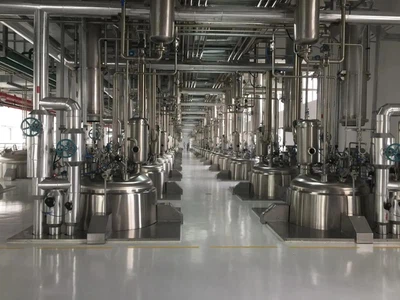
3,Current situation and challenges of industrial development
Despite the broad application prospects of phloretin, industrialization still faces three major challenges: in terms of source stability, apple production is significantly affected by climate. In 2022, China's apple production will decrease by 11.3% (according to the National Bureau of Statistics), leading to an increase in raw material costs; The extraction standard is missing, and there is currently no national quality standard for phloretin extract; Insufficient technological transformation, the localization rate of supercritical extraction equipment is only 35%, and the core components still rely on imports (China Pharmaceutical Equipment Annual Report 2023).
In terms of the market, according to data from the Health Industry Association, the global market size of phloretin is expected to reach $120 million in 2023, with cosmetics accounting for 62% and the pharmaceutical industry accounting for 28%. China is the leading global supplier of apple-derived phloretin raw materials, accounting for over 50% of the world's supply. But the market for high-purity refined products remains dominated by German and Japanese companies.
4, Future development direction
Diversified development of sources: Recent studies have revealed that wild apple species such as Malus baccata can contain up to 2.4 times more phloretin than cultivated varieties (Journal of Plant Resources and Environment, 2023), suggesting significant potential for further development.
Green upgrading of processes: Emerging technologies, including microwave-assisted extraction and deep eutectic solvent extraction, are currently under investigation, with preliminary results showing over 40% reduction in energy consumption. (Chemical Industry Progress, 2024, Issue 1).
Standard system construction: The China National Institute for Food and Drug Control has launched a quality control research project for plant extracts in 2023, and is expected to release relevant technical guidelines in 2025.

APPCHEM specializes in producing high-purity Phloretin for cosmetic and pharmaceutical applications. Our products are known for their exceptional quality, stability, and efficacy. Enhance your skincare and wellness formulations with Appchem's phloretin, backed by rigorous R&D and strict quality control. Explore more at AppChem! (Serrisha: cwj@appchem.cn; +86-138-0919-0407)
Reference
[1]K. Lee, Y. J. Kim et al. "Major phenolics in apple and their contribution to the total antioxidant capacity". Journal of agricultural and food chemistry. [2003-09-30]
[2]1st Research Meeting on Biochemistry. State University of Maringá. [2021-12]
[3]P. Hilt, A. Schieber et al. "Detection of phloridzin in strawberries (Fragaria x ananassa Duch.) by HPLC-PDA-MS/MS and NMR spectroscopy". Journal of agricultural and food chemistry. [2003-04-04]
[4]Developing and improving enzyme-driven technologies to synthesise emerging prebiotics. Noelia Losada-García et al. [2025-04]
[5]Extraction methods of citrus peel phenolic compounds: a review. N. M'hiri et al. [2014-05-19]